Illinois Planting Zones for Gardeners
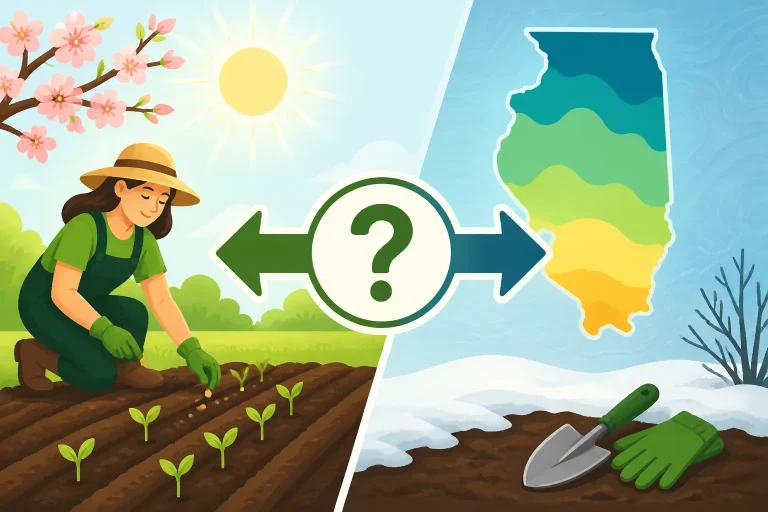
Choosing plants for an Illinois yard can feel like a guessing game: a perennial may thrive in one part of the state yet struggle somewhere colder, while a warm spring can tempt you to plant vegetables too soon. Hardiness zones help narrow plant choices, but they are not a planting calendar. The key is to use your zone alongside local weather, garden conditions, and each crop’s needs.
What an Illinois planting zone tells you
A plant hardiness zone is a guide to the winter cold a perennial plant may be able to withstand. It can help you screen trees, shrubs, and perennial flowers before buying them. If a plant is rated for a colder zone than yours, it is generally a better candidate for winter survival than one rated for a warmer zone.
That is useful information, but it is only one part of a plant’s prospects. A hardiness zone does not promise that a plant will thrive in a particular yard. It does not describe every winter temperature, predict the weather in the coming season, or account for all the conditions that shape a garden.
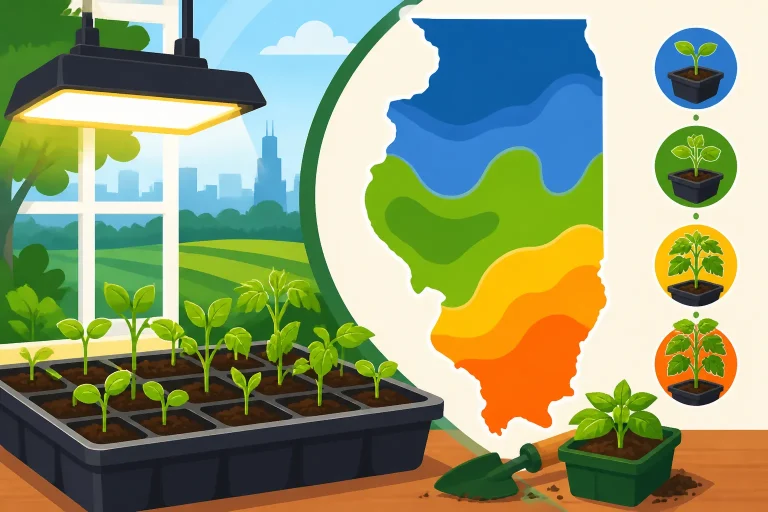
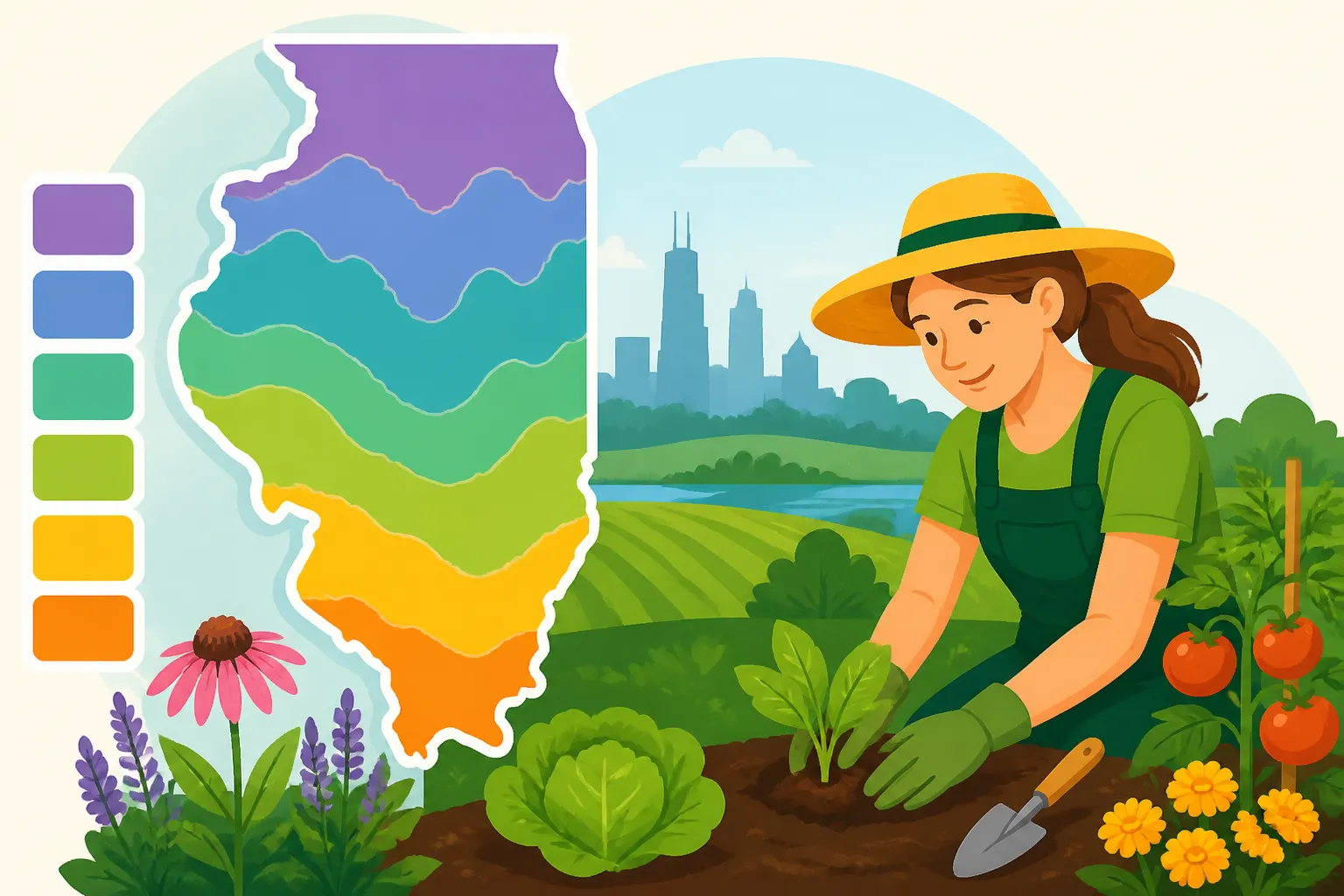
The USDA 2023 plant hardiness map divides Illinois into six zones, with 12 sub-zones, ranging from zone 5a in northwestern Illinois to the newly added 7b zone in southern counties, according to University of Illinois Extension. In its summary of that same map, University of Illinois Extension describes the statewide span as zone 5a in northwestern Illinois to the newly added 7b zone in southern counties.
A zone is most helpful as an initial filter. It can tell you whether a plant’s stated winter-hardiness range is likely to fit the broad climate where you garden. It cannot tell you whether the plant will get enough sun, drain well, tolerate wet soil, or flower at the right time for your preferences. Nor does a suitable zone mean a plant is native, pest-resistant, or low-maintenance.
When you see a zone rating on a plant tag or in a catalog, treat it as a clue about cold tolerance rather than a guarantee. Check what the rating describes and compare it with the zone shown for your area. If the plant’s hardiness is close to the edge of its listed range, pay particular attention to your yard’s exposure and winter conditions. A sheltered planting near a building may fare differently from one in an open, windy spot.
For vegetables, the zone can provide background about the broad climate, but it does not tell you when to sow seed or set out a transplant. Many annual vegetables are grown for one season, and their success depends heavily on growing-season temperatures, soil warmth, frost risk, and the crop’s time to maturity. That is why a zone map should sit beside, not replace, a planting calendar such as Illinois Planting Dates by Region: Spring and Fall Schedules.
How the zone pattern differs across Illinois
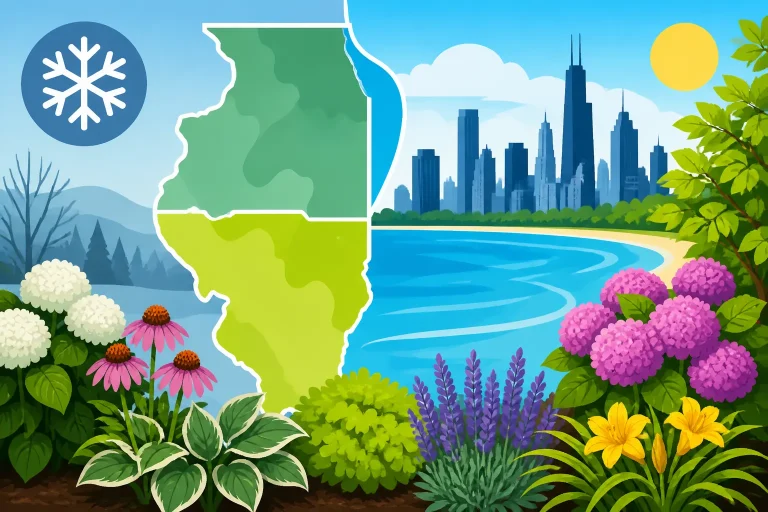
Illinois spans a broad north-to-south range of winter conditions. The northern part of the state generally has colder winter conditions than the southern part, but the map’s zone boundaries are not a substitute for looking up the area where you garden. A town name, county, or broad regional label may help orient you; the map is the better tool for checking a location.
On the USDA 2023 plant hardiness map, Illinois ranges from zone 5a in northwestern Illinois to zone 7b in southern counties, according to University of Illinois Extension. Those endpoints describe a statewide pattern, not an address-level guarantee. Nearby areas can fall into different map zones, and a small shift in location may matter when you are choosing a plant near the edge of its hardiness range.
| What you are checking | What the zone can help you assess | What you still need to check |
|---|---|---|
| A perennial flower | Whether its winter-hardiness rating is a reasonable match for the broad area | Sun, soil moisture, drainage, exposure, and care needs |
| A tree or shrub | Whether it is a plausible candidate for surviving local winter cold | Mature size, site conditions, wind exposure, and the plant’s other requirements |
| A vegetable crop | General background about the area’s climate | Frost timing, soil warmth, sowing instructions, and days to maturity |
| A garden near a boundary | Which hardiness rating to investigate first | The location on the map and conditions in the actual planting spot |
The map offers a useful statewide overview, but it does not divide every neighborhood according to the way gardeners experience its weather. A lake-influenced yard, a dense urban block, and an open rural plot may have different local conditions even if they fall in the same mapped zone. That does not make the map unreliable; it means the map answers a broad question about winter hardiness, while the garden asks more specific questions about exposure and timing.
In northeastern Illinois, for example, urban structures and nearby open land can affect how a garden experiences cold. A yard close to buildings may not behave exactly like an exposed plot beyond town. For a closer look at these local variations, see Microclimates Across Northeastern Illinois Urban and Rural Yards. Gardeners near the lake can also use Lake Shore vs Inland Chicagoland: Adjusting Your Planting Schedule to think through how local conditions may affect timing.
Regional information is still valuable. If you are new to Illinois or moving from one part of the state to another, a calendar based on your old garden may not transfer well. Compare the new location’s zone with its local frost and planting guidance instead of relying on a familiar date from elsewhere. Building a Local Illinois Garden Calendar After an Out-of-State Move offers a way to make that reset.
How to find and use your zone
The practical first step is to look up the area where you garden on the current USDA Plant Hardiness Zone Map. Search by the location information the map accepts, then check the mapped area around the garden rather than assuming a whole town shares one zone. If your yard is near a boundary, treat the result as a guide and avoid making a plant purchase solely on the basis of a border line.
For a step-by-step look at checking a location, use Checking Your Illinois Zone by ZIP Code on the USDA Map. A ZIP code can help you locate an area, but it should not be treated as a promise that every yard within it has identical conditions. The actual planting site still matters.
Once you have a likely zone, use it in a simple decision process:
- Read the plant’s hardiness information. Look for the listed cold-hardiness range or minimum conditions described by the grower. Do not assume that a plant’s label gives every detail needed for success.
- Compare the rating with the mapped area. If the plant is listed as suitable for colder conditions than your area, it may be a reasonable winter-hardiness candidate. If it is rated for warmer conditions, winter survival may be less dependable.
- Check the plant’s site requirements. Match its needs for light, drainage, soil moisture, and space to the location where it will grow.
- Consider exposure and establishment. A newly planted specimen, a windy location, or a spot that stays wet may be more challenging than a protected, well-drained bed.
- Use separate timing guidance for planting. A hardiness rating does not tell you when the soil is workable or when frost risk is low enough for a tender crop.
When a plant falls near the edge of its stated range, look for more information before committing to a large planting. Ask whether the plant is being grown in a comparable setting, whether it needs winter protection, and whether your site has features that make it more exposed or more sheltered. A small trial planting can be a sensible way to test a borderline choice before devoting a large bed to it.
Do not overinterpret a single map color. The boundary between zones is a planning aid, not a fence separating plants that can grow from plants that cannot. Plant health depends on more than the mapped winter pattern, and an individual plant may cope with conditions that differ from the broad rating. Still, if dependable winter survival is important, favoring plants suited to the zone shown for your area is a practical starting point.
What planting zones do not tell you
The most important limitation is that a hardiness zone is not a spring frost date. A zone helps describe winter cold tolerance for perennial plants; it does not forecast when the final spring frost will occur, when the first autumn frost will arrive, or whether a particular week is safe for tender crops.
That distinction matters because gardeners often see a warm spell and assume that planting time has arrived. A short stretch of mild weather can be followed by cold nights. A zone map cannot tell you whether that reversal will happen. For vegetables and tender flowers, use local frost information and the crop’s own temperature needs. Illinois Frost Dates Guide: Spring Thaw to Autumn Freeze and How to Use Spring Freeze Odds When Timing Early Garden Sowing address the separate question of frost risk.
A hardiness zone also does not measure the full length of the growing season. It cannot tell you whether a long-season vegetable will have enough time to mature before autumn cold. For that, compare the crop’s days-to-maturity information with your local growing-season planning. Illinois Growing Seasons: Counting Days to Maturity to Frost explains why maturity time and fall conditions matter alongside the zone.
The map does not describe soil conditions. Heavy, compacted, or poorly drained soil can challenge a plant regardless of its winter rating. A site that remains wet may be unsuitable for a plant that needs sharp drainage, while a dry, exposed bed may stress a plant that prefers consistent moisture. Likewise, the zone does not tell you whether the soil is suitable for a particular crop or whether a raised bed, container, or in-ground plot is the better fit.
Nor does the map describe sun and shade. A plant rated for your zone may still perform poorly beneath dense tree cover if it needs full sun. A shade-tolerant plant may struggle in a hot, bright location. Check the plant’s light needs against the conditions through the day, including shade cast by buildings, fences, and mature trees.
Wind and snow exposure matter too. An exposed bed may lose snow cover and dry out more quickly than a sheltered one. Buildings, fences, slopes, and nearby vegetation can alter wind and moisture patterns. These effects can make a plant’s experience more difficult or more favorable than the zone alone suggests, without changing the mapped zone for the location.
A zone is not a disease-resistance rating, a promise of flowering, or a measure of how much care a plant needs. A plant may tolerate winter cold but still be vulnerable to a local pest or disease. It may survive but fail to bloom reliably if its other needs are not met. If a plant’s success depends on a particular soil type, drainage pattern, or amount of sun, those requirements deserve as much attention as its hardiness rating.
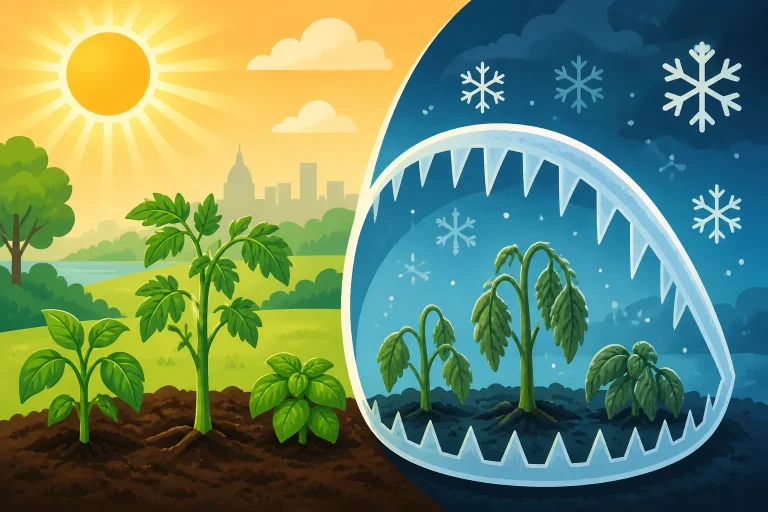
Most importantly, a zone is not a substitute for current weather. The map is a long-term planning reference, not a forecast. Before planting outdoors, check the conditions expected for the coming days and follow the crop’s own guidance. If a cold spell is forecast, protect or delay vulnerable plants as appropriate; a favorable zone does not shield a seedling from a damaging freeze.
Choosing trees, shrubs, and perennial flowers
For plants that remain outdoors through winter, hardiness information can help narrow a shopping list. Start with the kinds of plants that suit the purpose of the space, then use the zone to screen for winter survival. A tree selected for shade, a shrub chosen for a boundary, and a perennial intended for a sunny border all need to fit the site as well as the regional climate.
When comparing plant choices, check the full growing requirements rather than stopping at the zone label. A suitable tree still needs enough room for its mature canopy and roots. A shrub that tolerates the local winter may not suit a wet corner or a hot afternoon exposure. A perennial flower may be hardy enough but spread more than the bed can accommodate. For broader selection help, see Choosing the Right Tree for Your Illinois Yard: Spot by Spot and Flowering Perennials for Illinois Gardens: Spring to Autumn.
A plant’s listed range can also help you judge how much risk you are comfortable taking. If dependable survival is the priority, choose a plant whose stated hardiness comfortably includes the zone for your area. If you are considering a plant near the warm edge of its range, investigate whether it needs a particularly protected location or careful winter care. If it is near the cold edge, consider whether the site is exposed to wind or whether it commonly loses insulating snow cover.
A favorable microclimate may help, but it is not a replacement for checking the plant’s needs. A sheltered location beside a building can differ from an exposed garden edge, and an urban bed may experience different conditions from a nearby open area. Conversely, a sheltered spot can also hold heat or moisture in ways that do not suit every plant. Observe the site rather than assuming that warmth is always beneficial.
New plantings deserve particular attention. A plant that has not yet established a strong root system may be more vulnerable to stress than a mature specimen. Make sure it is planted in a suitable location and receives appropriate care while establishing. If the plant is near the edge of its hardiness range, avoid making a large, expensive planting based on the zone label alone.
For a garden designed around native plants, use the zone as one filter, not the main definition of suitability. Native choices still need to match the light, moisture, and space available in the yard. A plant native to Illinois may fit a different habitat than the one in your garden. Matching Native Illinois Species to Light, Moisture, and Space can help connect plant choice to actual site conditions.
Using zones in a vegetable planting calendar
Vegetable gardeners can use the zone for context, but should not use it to set sowing dates. Annual crops are usually scheduled around temperatures, soil conditions, frost risk, and the time needed to mature. A winter-hardiness map cannot tell you when the soil is warm enough for a particular seed or when outdoor conditions are safe for a tender transplant.
Start with the crop. Cool-season crops and warm-season crops respond differently to chilly soil and cold nights. Read the seed packet or plant label for sowing and transplanting instructions, then compare those instructions with local seasonal guidance. Illinois Vegetable Planting Calendar: Month-by-Month Sowing provides a broader planning reference, while Which Vegetables Can Go In Before the Last Illinois Frost? addresses the difference between crops that tolerate cool conditions and those that do not.
For crops started indoors, use a regional seed-starting calendar and the crop’s instructions rather than counting back from the zone alone. Seedlings can become stressed if they are kept indoors too long, but setting them outdoors before conditions suit them can also cause problems. Illinois Indoor Seed-Starting Guide: Regional Calendars by Zone can help with that part of the schedule.
Before planting directly in a bed, consider whether the soil is workable and suitable for the crop. Wet, cold soil may be a poor place for some seeds even if the calendar suggests sowing season is near. Soil condition is a separate question from hardiness, and it can vary across beds in the same yard. For that reason, it is useful to check the planting area rather than treating a regional date as an instruction to plant regardless of conditions.
For warm-season crops, wait for the conditions the crop requires. A stretch of pleasant daytime weather does not necessarily mean that nighttime temperatures or soil conditions are ready. Tender plants can be set back by a cold snap after they have been moved outdoors. Why Mid-May Ground Temps Matter More Than an April Heat Wave and Balancing Spring Freeze Risks When Setting Out Tender Crops explain why timing needs to account for more than the zone.
The same idea applies in autumn. The zone does not predict the exact first frost for your garden. To plan a late crop, consider the time it needs to mature, the local seasonal outlook, and the crop’s tolerance of cool weather. A planting that begins too late may not reach harvest before conditions turn unsuitable. Matching Vegetable Maturity Days to Illinois Freeze Dates can help connect the crop’s maturity information with fall planning.
For a practical vegetable calendar, use a layered approach:
- Use the hardiness map to understand the broad winter-climate context for perennials and the region.
- Use regional planting guidance to identify the general window for a crop.
- Check the seed packet or plant label for the crop’s temperature and sowing instructions.
- Assess the bed’s soil condition and the forecast before planting.
- Revisit the plan when weather shifts rather than following a date mechanically.
This approach avoids a common mistake: treating a zone number as if it were a universal planting date. Two gardeners in the same zone may need to adjust for shade, wind, soil, elevation, or proximity to buildings. A calendar is a starting point for decisions, not a reason to ignore what is happening in the garden.
A practical way to build your Illinois garden plan
A reliable plan begins with the site and the kind of plant you want to grow. The order matters. If you begin with a plant catalog and shop only by hardiness rating, it is easy to overlook whether the chosen plant fits the space. If you begin with a date on a calendar, you may miss that the soil is still too wet or the forecast has changed.
Use this sequence to make decisions:
- Locate the garden on the USDA map. Treat the zone as a broad reference for winter-hardiness screening, and check the map around the actual garden location.
- Describe the planting site. Note its light, drainage, moisture, wind exposure, and available space. These qualities help determine whether the plant’s growing needs fit.
- Identify whether the plant is perennial or seasonal. For a tree, shrub, or perennial flower, use hardiness information to assess winter survival. For a vegetable, focus more on sowing conditions, frost risk, and maturity.
- Read the plant’s own instructions. Seed packets, nursery tags, and reliable crop guidance provide details that a zone map does not.
- Compare the plan with local seasonal guidance. Use regional planting calendars and frost information to shape the timing.
- Check conditions close to planting. Look at the soil and expected weather, and adjust if the site or forecast makes the planned timing unsuitable.
- Keep notes. Record what you planted, where it grew, and how it performed. This helps distinguish a poor plant-site match from an unusually difficult season.
For a perennial planting, the key questions are: Is the plant suited to the local winter conditions? Does the site meet its needs for light and moisture? Is there enough room for its mature size? For a vegetable bed, ask instead: Is this crop appropriate for the current season? Is the soil ready? Is the forecast suitable? Does the crop have time to mature before conditions change?
A simple record of your own garden can improve future decisions without turning every planting into a calculation. Note which areas stay wet after rain, which spots warm quickly, where frost lingers, and where wind is strongest. These observations do not alter the USDA zone, but they help explain why a plant performs differently from what its label might suggest.
If a plant fails, do not assume the zone was necessarily wrong. Check whether the cause may have been poor drainage, inadequate light, drought, a late cold snap, or a pest problem. If a plant succeeds, do not assume the same choice will work in every part of the yard. A sheltered bed may have given it an advantage that an exposed location lacks.
The most useful role for planting zones is to narrow choices and support better questions. They help you screen winter-hardy plants and understand the broad climate around your garden. Regional calendars, local frost information, soil conditions, and crop-specific instructions then fill in the details the map cannot provide. That combination makes it easier to choose plants thoughtfully without expecting a zone label to answer every gardening question.
Frequently Asked Questions
Are planting zones the same as frost dates?
No. A hardiness zone helps describe winter cold tolerance for perennial plants. Frost dates are a separate planning reference for when freezing conditions may occur, and they are more directly relevant to timing tender crops.
Does a suitable zone guarantee that a plant will grow well?
No. It is a useful first screen for winter survival, but the plant also needs suitable light, soil, drainage, moisture, and space. Local exposure can affect results too.
Can I use my Illinois zone to decide when to plant vegetables?
Use it as background, not as a planting date. For vegetables, follow crop-specific instructions and regional planting guidance, and consider soil conditions, frost risk, and the forecast.
What should I do if my garden is near a zone boundary?
Check the map closely and treat the result as a broad guide rather than a precise description of every spot on your property. For a plant near the edge of its stated hardiness range, research its needs and consider the exposure of the planting site before buying it.
Sources
- University of Illinois Extension — Shifting USDA plant hardiness map reflects changing climate, changes for plants | Illinois Extension | Illinois (checked November 15, 2026)
Disclaimer
This article is for general informational purposes only and does not constitute professional advice. Laws, prices and regulations vary by location and change over time. Consult a qualified professional for guidance on your specific situation. Illinois Gardening Guide is not a government agency and is not affiliated with any university extension, state department of agriculture or other government agency.