Building a Local Illinois Garden Calendar After an Out-of-State Move
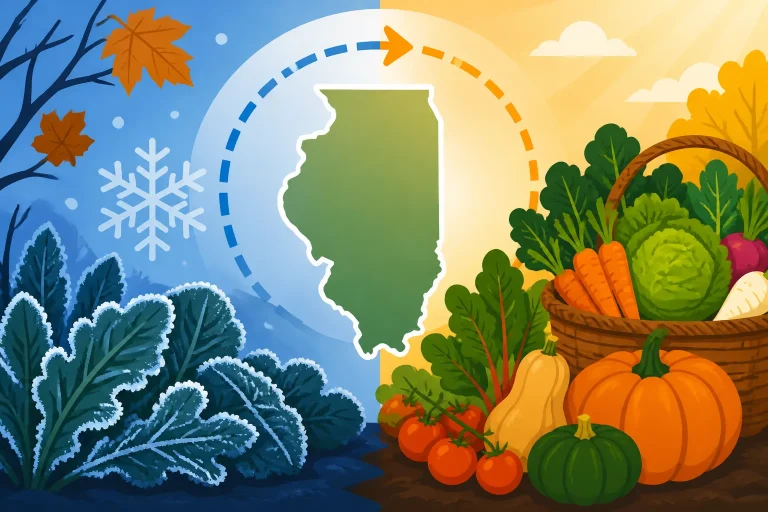
Moving to Illinois can make a familiar planting calendar unreliable: spring warmth, frost risk, and the length of the growing season vary across the state. A better plan is to rebuild your schedule around your Illinois region, your garden’s local conditions, and the needs of each crop. This approach helps you use old experience without letting an out-of-state calendar set the wrong pace.
Why an Out-of-State Calendar Needs a Reset
A planting calendar is useful only when its assumptions match your garden. A schedule from your former home may reflect a different climate, a longer or shorter growing season, or a different pattern of spring and autumn cold. Even a calendar that names the same vegetables can give misleading cues if it is tied to another region’s weather.
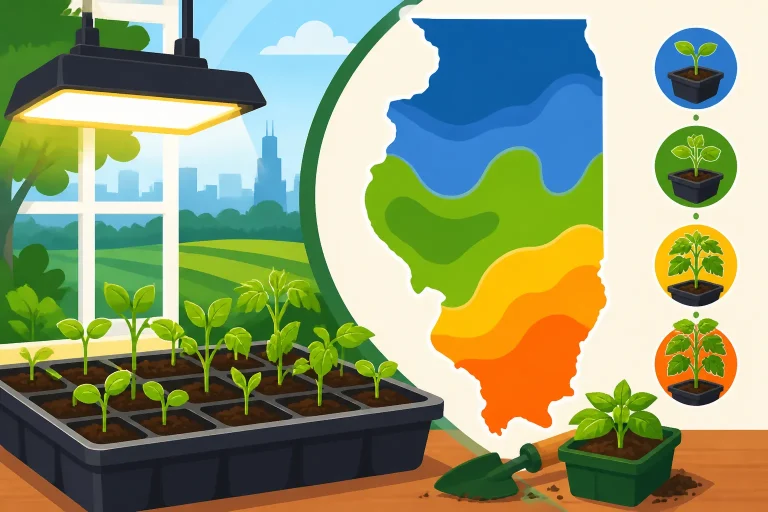
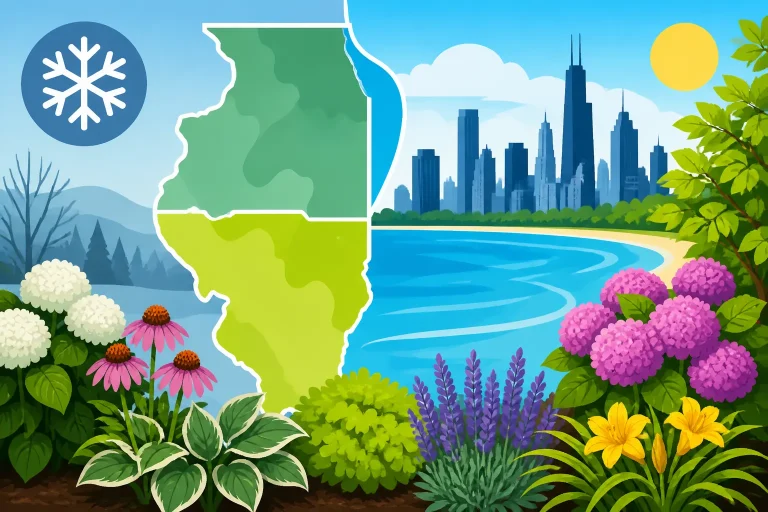
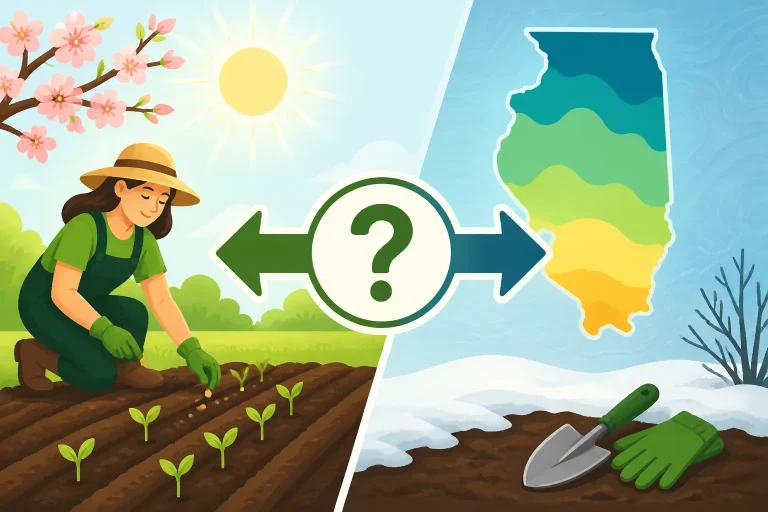
Illinois itself is not one uniform gardening area. According to University of Illinois Extension, southern Illinois gardeners can generally start crops two weeks earlier than central Illinois gardeners. Northern Illinois gardeners can plant about two weeks later than central Illinois gardeners. That broad regional difference is a starting point, not an exact schedule for every neighborhood or garden bed.
The season length also changes across the state. According to University of Illinois Extension, the average growing season ranges from 215 days in far southern Illinois to 180 days in far northern Illinois. This range matters when you choose crops that need a long stretch of favorable conditions, plan a second sowing, or decide whether a late-season crop has time to mature.
A calendar from a warmer place may encourage you to set out tender crops too soon. A schedule from a colder place may lead you to miss opportunities for early greens or later sowings. Neither calendar is automatically useless: it can help you think about crop order, seed-starting, and harvest planning. The important step is to treat it as a reference and adjust it to Illinois conditions.
Start your reset by identifying the broad part of Illinois where you garden, then refine the plan for your specific site. For more background, Illinois Planting Dates by Region: Spring and Fall Schedules can help you compare regional patterns, while Building Great Soil for a New Illinois Vegetable Bed Without Topsoil covers a separate but equally important part of getting a new garden established.
Build the Calendar Around Your Place in Illinois
A useful local calendar combines regional guidance with observations from the actual garden. Start with your general location in Illinois, then note whether your site tends to warm early, stay cool, dry quickly, or hold water. Those details can shift the best moment to sow or transplant, even when two gardens are in the same broad region.
Use regional guidance as a starting point
Look for an Illinois schedule that distinguishes between northern, central, and southern conditions rather than relying on a single statewide date. Regional guidance gives you a better first estimate for when to prepare beds, start seeds indoors, and consider sowing outdoors. The schedule still needs adjustment for current weather and your own site.
If you recently moved, avoid assuming that a similar-looking spring means the same planting conditions as your previous home. A warm spell can arrive before the soil has warmed enough for a tender crop. Conversely, a cool stretch does not necessarily mean that every cold-tolerant crop must wait. It helps to separate crops by their needs rather than treating the entire garden as one planting event.
Illinois Vegetable Garden Sowing and Planting Schedule can serve as a broader reference when you are organizing sowing and planting tasks. For a closer look at the calendar differences between parts of the state, Illinois Planting Dates by Region: Spring and Fall Schedules is relevant to the regional comparison.
Learn how your garden behaves
Observe the garden instead of relying only on a regional label. Make notes about where snow or frost tends to linger, which areas receive morning or afternoon sun, and whether a bed is sheltered by a building or exposed to wind. Keep track of places that dry out quickly and spots where water remains after rain.
A sunny bed beside a wall may warm earlier than an open bed, while a low or shaded area may remain cool longer. The reverse can also happen: a sheltered corner can trap cold air or stay damp. These differences are why a calendar for a town or region cannot describe every garden precisely. Microclimates Across Northeastern Illinois Urban and Rural Yards and How Morning Sun and Shade Pockets Shift Garden Planting Dates offer more ways to think about those site-level effects.
Record what you see over the season. Write down when a bed becomes workable, when seedlings emerge, when transplants settle in, and when cold weather damages or slows growth. These observations will not make next season predictable, but they give you a more useful basis for adjusting your schedule than memory alone.
Keep frost information in perspective
Frost dates are helpful planning references, but they are not guarantees that a particular night will be frost-free. Your location, exposure, elevation, nearby structures, and local weather can all affect what happens in a specific garden. Use frost information to think about risk, then pay attention to the forecast and the conditions around your plants.
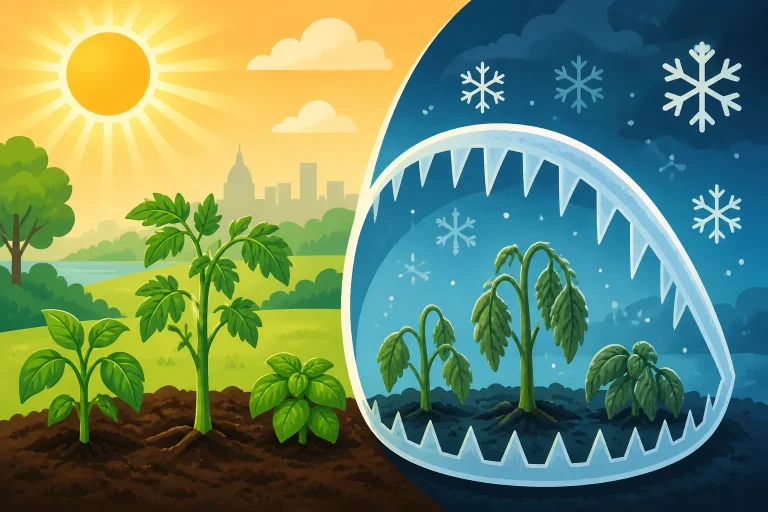
The practical question is not simply, “What is the date?” It is, “How much risk can this crop tolerate, and what can I do if cold weather returns?” A hardy early crop can be treated differently from a tender transplant. You can also keep protective materials available if a cold snap threatens plants that are already in the ground. For help interpreting local risk, see Illinois Frost Dates Guide: Spring Thaw to Autumn Freeze and How to Use Spring Freeze Odds When Timing Early Garden Sowing.
Sort Crops by What They Need
A calendar is easier to use when it groups crops by temperature tolerance and planting method. Instead of looking for one opening day for the whole garden, decide which crops can handle cool conditions, which need warmer soil, and which are started indoors before moving outside.
Cool-tolerant crops and warm-season crops
Some crops can be sown or planted while spring remains cool. Others grow poorly or face extra stress if placed outdoors before the soil and weather suit them. Use crop requirements and local observations together: a regional calendar can suggest when to begin watching for a planting window, while soil and weather help confirm whether the conditions are suitable.
This distinction is especially useful after a move because an out-of-state calendar may group crops differently or assume a different spring pattern. Avoid copying a sequence without checking what each crop needs. If a cool spell returns, one crop may continue growing while a tender crop may stall or suffer damage.
Which Vegetables Can Go In Before the Last Illinois Frost? can help you think through early planting choices. For tender crops, Balancing Spring Freeze Risks When Setting Out Tender Crops and Covering Garden Vegetables When an Illinois Cold Snap Threatens address the risks and possible protections without treating a calendar date as a promise.
Match direct sowing and transplanting to the crop
Direct-sown seeds and indoor-started transplants do not share one schedule. A seed planted outdoors depends on suitable soil and outdoor conditions for germination and early growth. A transplant has already begun growing, but it may need time to adjust to outdoor sun, wind, and temperature changes.
When translating a schedule from your former home, check whether it refers to sowing seed, starting seed indoors, or setting a plant outdoors. These are different actions. A date for indoor seed-starting does not tell you when a seedling is ready to leave its protected environment. Likewise, an outdoor sowing window is not a signal to move every crop outside.
Direct Sowing vs Transplanting in Illinois Garden Beds explains how those approaches differ. If you are starting seeds indoors, Illinois Indoor Seed-Starting Guide: Regional Calendars by Zone can help you plan the transition from indoor growing to outdoor planting. Use your Illinois region as the framework, then consider how your home, lighting, and garden conditions affect the process.
Read seed packets, but interpret them locally
Seed packets offer useful information about sowing, spacing, and expected maturity, but their instructions are not a substitute for local timing. A packet may describe growing conditions generally without accounting for the differences between far northern and far southern Illinois. Read the directions, then compare them with a schedule suited to your area.
Pay attention to whether a crop is described as suitable for direct sowing or transplanting, how it responds to cold, and how much time it needs to mature. For a later crop, consider whether the remaining season is likely to support it. For an early crop, check whether it can tolerate the conditions expected when it begins growing.
Reading Seed Packets and Maturity Days for Illinois Gardeners is a useful companion when you are adapting seed instructions to a local schedule. For a broader look at crops that need more time, Matching Vegetable Maturity Days to Illinois Freeze Dates can help connect maturity information with the end of the growing season.
Plan the Whole Season, Not Just Spring
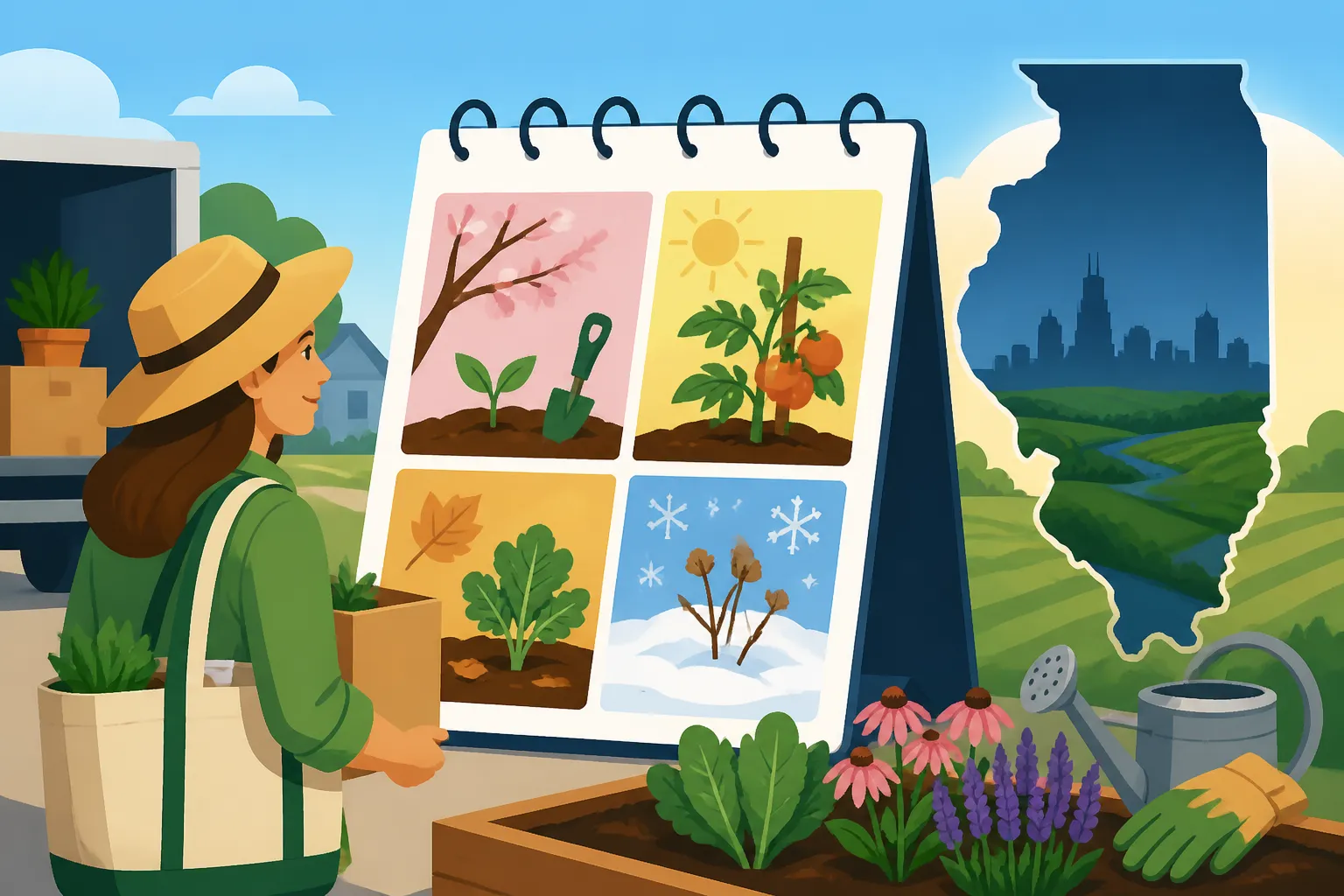
A local calendar should cover more than the first planting of the year. It can help you coordinate spring crops, summer plantings, and autumn harvests, while leaving room for changes in weather. The goal is not to predict every task perfectly; it is to avoid treating the garden as if it has just one planting window.
Make a crop-by-crop working calendar
Create a simple record with a line for each crop. Note whether you plan to start it indoors, sow it directly, or transplant it. Add the regional planting guidance you are using, then leave space to record what happened in your own garden. This turns a general calendar into a personal reference over time.
A useful record can include:
- The crop and the variety listed on its seed packet
- The planned planting method
- The regional guidance you consulted
- Whether the soil and weather seemed suitable
- Any cold, heat, or moisture problems after planting
- When the crop began producing and when it stopped
These notes are more valuable when they describe conditions, not just dates. “The bed stayed wet after rain” or “the sheltered corner warmed sooner” can explain a result that a date alone cannot. At the end of the season, note which plantings worked well and which ones struggled. Use that information to adjust your next plan rather than assuming one unusual season represents a permanent pattern.
For a more detailed approach, Keeping an Illinois Garden Journal for Varieties and Yields covers the value of recording garden results. Tracking Sowing Dates and Problem Patterns in a Garden Journal can also help you turn observations into practical adjustments.
Use succession planting to spread harvests
Rather than sowing an entire crop at once, you may be able to stagger plantings so that harvests are spread over time. This can help avoid a glut of one crop and make better use of available bed space. The right interval and number of plantings depend on the crop, its growth rate, and the conditions in your garden, so follow crop guidance instead of applying one schedule to everything.
A succession plan also needs to account for the change from spring into summer and from summer into autumn. A crop that performs well in cool conditions may struggle as heat arrives. A later sowing may need enough time to grow before cold weather returns. Illinois regional schedules and crop maturity information can help you weigh those trade-offs.
See Succession Planting for an Extended Illinois Vegetable Harvest for more on spreading plantings across the season. For the transition into autumn, Coordinating Spring and Fall Vegetables Across Illinois and Using Days to Maturity to Time Autumn Garden Sowing can help you think about what may fit after summer crops finish.
Leave room for weather adjustments
A calendar should guide decisions, not force them. Soil can remain cold or wet after a mild spell, and an unexpected cold snap can disrupt an otherwise reasonable plan. If the bed is saturated, difficult to work, or unsuitable for the crop, waiting can be better than following a date mechanically. Why You Should Never Till or Dig Saturated Garden Dirt explains why soil condition matters when preparing a bed.
You can also plan for uncertainty by keeping some flexibility in your seed and transplant schedule. Avoid putting every tender crop out at once if the weather remains unsettled. If conditions turn unfavorable, pause before making the next planting and reassess. For plants already outside, consider appropriate protection and follow the guidance for the crop and covering material.
In summer, heat and moisture can alter a plan that looked sound in spring. Newly planted crops may need closer attention as conditions change, while a dry spell can affect beds and containers differently. Timing Garden Irrigation and Moisture Across Illinois Seasons can help you plan around seasonal changes, and Managing Seasonal Weather Swings in Illinois Home Gardens provides additional context for adapting garden care as weather shifts.
Turn Your First Illinois Season Into a Better Calendar
The first season after a move is a chance to gather local information. You do not need to wait until you know every detail before planting, but it is sensible to treat early decisions as observations as well as actions. A note about how a crop responded can make the next season’s calendar more accurate.
Compare plans with results
At the end of each planting period, compare what you planned with what happened. Did the soil stay too cool? Did the bed dry faster than expected? Did a crop begin well and then stall? Was a sheltered spot noticeably different from the rest of the garden? These questions can identify whether the issue was timing, site conditions, crop choice, or care.
Try not to change several factors at once when you are troubleshooting. If a planting struggles, first consider whether the crop was suited to the conditions and whether the soil and weather matched its needs. Then review watering, spacing, shade, and competition from nearby plants. A clear record makes it easier to see patterns without assuming that every failure came from the calendar.
When the next season approaches, update your working schedule with what you observed. Keep the broad Illinois regional guidance, but adjust a particular bed or crop if your notes show a consistent pattern. A garden calendar becomes more local through repeated comparison, not through finding one schedule that perfectly predicts every season.
Use zones and seasons for different questions
Hardiness zones and growing-season length describe different aspects of gardening. A zone map can help with questions about winter survival of perennial plants, but it is not a complete schedule for sowing vegetables or moving tender crops outdoors. A growing-season estimate provides another piece of context, but it does not eliminate year-to-year weather variation.
If you are trying to place your garden in the broader Illinois context, Interpreting Illinois Hardiness Zones 5a Through 7b and Checking Your Illinois Zone by ZIP Code on the USDA Map address how to understand zone information. For planting decisions, pair that context with crop-specific timing, regional guidance, and observations from your own plot.
Keep the distinction clear when choosing plants. A perennial may survive winter in a location but still need the right soil, light, and moisture to thrive. A vegetable may fit the general season length but still need warm soil or protection from a late cold spell. The most useful calendar combines these different kinds of information rather than treating a single map or date as the answer to every question.
Keep the calendar useful and flexible
A workable Illinois calendar does not need to be complicated. Start with regional planting guidance, divide crops by their needs, and record what your garden teaches you. Add notes when local conditions differ from the broad schedule. If a calendar gives a date that conflicts with cold, wet soil or a vulnerable forecast, use the crop’s requirements and current conditions to make the decision.
It is also reasonable to change the plan during the season. A crop may finish early, a bed may become available later than expected, or weather may alter what is practical. Keep a short list of possible follow-up crops and check whether there is enough favorable growing time for them. Planning Sowing Dates for a Longer Growing Season and Illinois Growing Seasons: Counting Days to Maturity to Frost can help with this kind of planning.
The main adjustment after an out-of-state move is a change in perspective: use the old calendar as background, not as authority. Let Illinois regional guidance establish the broad pattern, then refine it with the needs of each crop and the conditions in your own garden. Over time, your notes will make that schedule less generic and more useful.
Frequently Asked Questions
Can I keep using my old planting calendar?
Yes, as a reference for crop order and general tasks, but do not rely on its timing without comparing it with Illinois regional guidance and local conditions. Differences in growing season, soil warmth, and frost risk can make the schedule unsuitable as written.
Should I use the same schedule across Illinois?
No. Illinois gardeners should account for regional variation. A statewide schedule can orient you, but the conditions in northern, central, and southern areas differ, and individual gardens also have their own microclimates.
Does a hardiness zone tell me when to plant vegetables?
Not by itself. Hardiness zones are useful context for winter survival, especially for perennial plants. Vegetable planting also depends on crop tolerance, soil conditions, seasonal weather, and the timing of frost risk.
What should I record during my first season?
Record the planting method, the conditions when you planted, and how the crop responded. Notes about cold, wet soil, dry beds, shade, and exposure can help explain results and improve your schedule next season.
Sources
- University of Illinois Extension — When to Plant | Home Vegetable Gardening | Illinois Extension | Illinois (checked November 15, 2026)
Disclaimer
This article is for general informational purposes only and does not constitute professional advice. Laws, prices and regulations vary by location and change over time. Consult a qualified professional for guidance on your specific situation. Illinois Gardening Guide is not a government agency and is not affiliated with any university extension, state department of agriculture or other government agency.