Mother’s Day Planting Rules Across Northern and Southern Illinois
Mother’s Day can feel like a natural deadline for getting the garden planted, but Illinois spring weather does not follow the holiday calendar. A planting plan that works in the south may be premature in the north, and a warm afternoon does not guarantee warm soil or safe nights. Use the holiday as a planning checkpoint, then adjust for region, crop, soil conditions, and the forecast.
Why Mother’s Day Is a Checkpoint, Not a Planting Rule
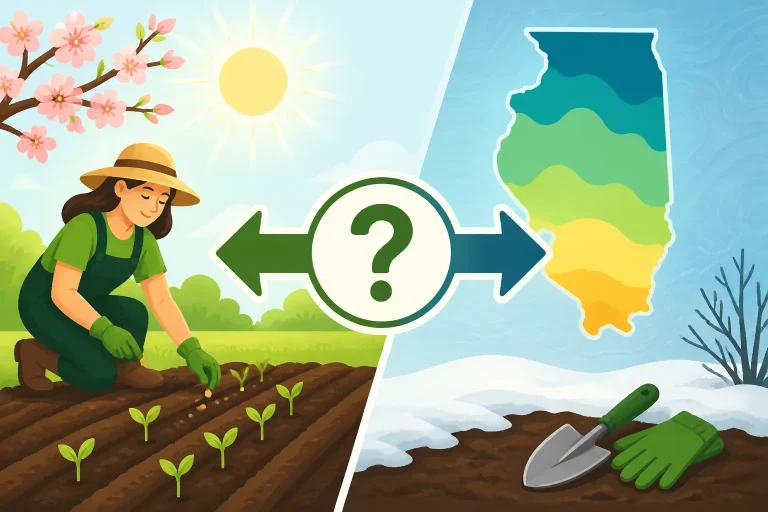
The holiday is easy to remember, which makes it a useful prompt to check the garden plan, inspect beds, and decide what can go outside. It is not a reliable signal that every crop is ready. Illinois stretches across different growing conditions, and spring warmth does not arrive everywhere at the same pace.
The key is to separate “planting” into different decisions. Cool-tolerant crops may be ready for outdoor sowing while warmth-loving crops still need protection or more time indoors. A bed can look ready from the patio and still be cold, wet, or difficult to work. And a sunny stretch can be followed by a chilly night that stresses tender starts.
Mother’s Day is best treated as a review point:
- Check whether the bed is dry enough to work without compacting the soil.
- Look at the forecast for the nights ahead, not just the current afternoon.
- Sort crops by their tolerance for cool conditions.
- Confirm that transplants are prepared for outdoor conditions.
- Keep a backup plan for tender plants if temperatures dip.
This approach is more useful than asking whether a certain crop “goes in on Mother’s Day.” The answer depends on where the garden is, what the crop is, and what the weather and soil are doing. Even neighboring yards may differ: a sunny, sheltered bed can warm sooner than an exposed plot, while a low spot may stay damp and cold.
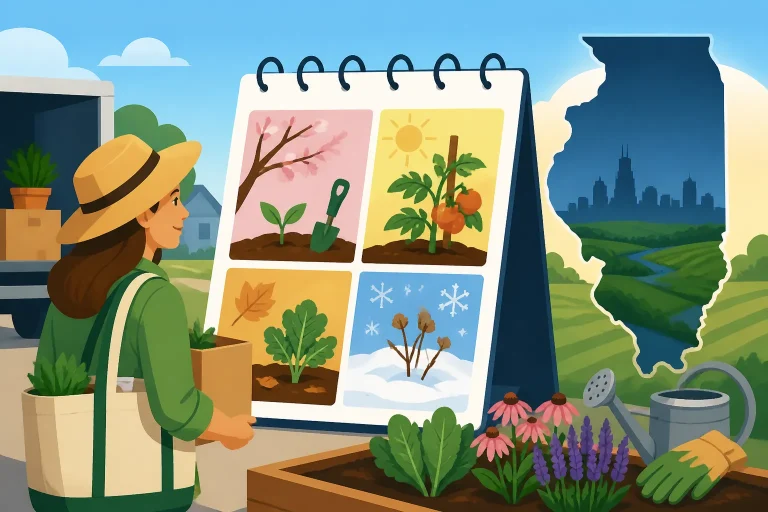
A calendar can still help organize the work. Illinois Planting Dates by Region: Spring and Fall Schedules and Illinois Vegetable Planting Calendar: Month-by-Month Sowing can help frame seasonal tasks, but a calendar date should not overrule conditions in the actual garden. If a schedule suggests planting and the soil is saturated or the forecast is unsettled, waiting is a sensible choice.
The practical rule is simple: let the holiday remind you to assess readiness, not dictate the planting day. This avoids rushing tender crops outdoors just because the calendar says spring is underway.
How the Timing Shifts Across Illinois
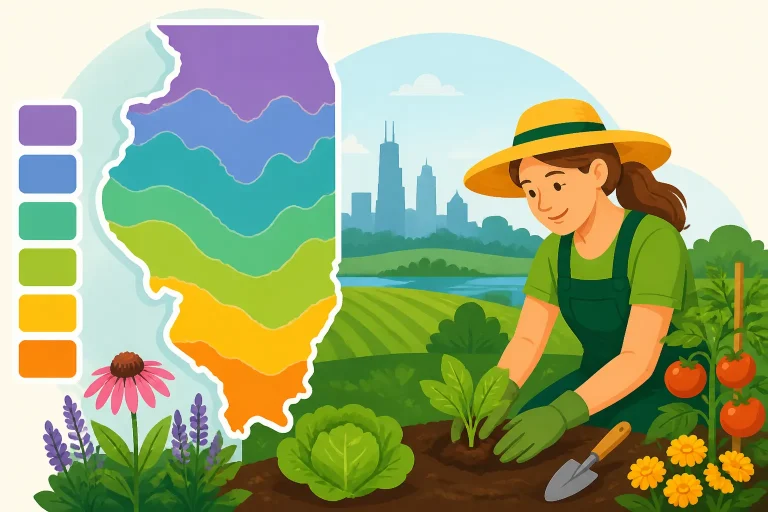
The north-to-south difference matters because a planting plan built around central Illinois cannot be applied unchanged across the state. According to University of Illinois Extension, southern Illinois gardeners can generally start crops two weeks earlier than central Illinois gardeners. According to University of Illinois Extension, Northern Illinois gardeners can plant about two weeks later than central Illinois gardeners.
Those shifts are useful for adjusting a regional schedule, but they do not make a specific holiday planting date safe for every crop or location. They describe a broad difference in timing, not a guarantee that a certain week will bring warm soil, calm weather, or frost-free nights. A cold spell can interrupt spring progress, and local exposure can change conditions within a region.
| Garden situation | How to use the regional timing | What still needs checking |
|---|---|---|
| Southern Illinois | The general schedule can begin ahead of central Illinois timing. | Soil readiness, crop tolerance, and the forecast for the garden itself. |
| Central Illinois | Use the central schedule as a reference point, then adjust to local conditions. | Whether the bed is workable and whether the crop can handle expected conditions. |
| Northern Illinois | Shift plans later than central Illinois timing. | Cold nights, cool soil, and the exposure of the planting site. |
| Any region near Mother’s Day | Treat the holiday as a planning checkpoint. | The crop’s needs and the current weather pattern. |
Think of these regional adjustments as a starting framework. A gardener in southern Illinois should not assume that every warm-season crop is ready simply because an earlier schedule is possible. Likewise, a northern Illinois gardener need not delay all sowing: crops that tolerate cool conditions may be suitable earlier than tender crops.
For a closer regional perspective, Understanding the Growing Season in Illinois and How Growing Season Length Varies Across Illinois Regions can help explain why a statewide schedule needs local adjustment. For gardeners who have recently moved, Building a Local Illinois Garden Calendar After an Out-of-State Move offers a helpful reminder that old planting habits may not match a new climate.
The most practical way to use regional timing is to shift the plan, then verify it crop by crop. Keep a local note of when beds become workable, when cold snaps interrupt planting, and which areas of the yard warm first. That record can make next spring’s decisions more tailored than a holiday date alone.
Sort Crops by Their Tolerance for Spring Conditions
A garden plan becomes easier when crops are grouped by how they handle cool spring weather. Rather than deciding whether “the garden” is ready, decide whether each crop is ready. This prevents a common mistake: treating hardy greens and tender warm-season vegetables as though they have the same needs.
Cool-tolerant crops are generally better candidates for early-season sowing than plants that need sustained warmth. They may still struggle in soil that is waterlogged or difficult to work, so tolerance for cool weather is not permission to plant in any conditions. Check seed-packet instructions and reliable crop guidance for the crop and variety in hand.
Warm-season crops are more sensitive to cold soil and chilly nights. Tomatoes, peppers, cucumbers, squash, beans, corn, and melons are examples of crops gardeners commonly handle more cautiously in spring. The exact readiness signals differ by crop, so avoid treating this group as if every plant has identical requirements. A warm afternoon is not enough evidence that the conditions will remain suitable.
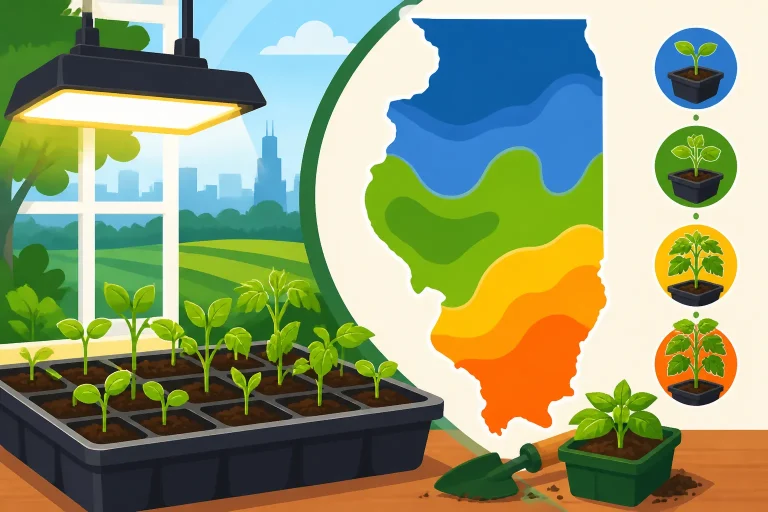
Transplants and seeds also need different decisions. Direct-sown seeds depend on the soil environment for germination and early growth. A transplant has already begun growing, but it can still be stressed by an abrupt move outdoors, exposure to wind, or a cold night. Starting plants indoors does not eliminate the need to acclimate them and choose a suitable outdoor window.
A simple crop-sorting process can help:
- Put cool-tolerant crops in the early group, and check whether the soil can be prepared without smearing or compacting it.
- Put warm-season crops in the cautious group, and wait for conditions that fit their needs rather than the holiday.
- Separate direct-sown crops from indoor-grown transplants, because each faces different stresses.
- Read the seed packet or plant tag for crop-specific requirements, then compare those instructions with local conditions.
- Decide what protection is available if a forecast changes after planting.
If you are unsure which crops can tolerate cool soil or spring frost, Which Vegetables Can Go In Before the Last Illinois Frost? and Spring Planting Guide for Cool and Warm Illinois Crops are useful companion reads. For details on indoor-grown plants, When to Move Vegetable Seedlings Outdoors Across Illinois Regions helps connect regional timing with the transition from indoor care to the garden.
A crop list with clear categories is more useful than a single “plant everything” weekend. It lets you make progress without exposing the most sensitive plants to conditions they are not ready to handle.
Check the Soil and the Site Before You Plant
A calendar can suggest that planting time is approaching, but the bed itself determines whether digging and sowing make sense. Wet soil is a poor planting surface. Working it when it is saturated can compress the spaces that roots and water need, leaving clods that are difficult to repair. The bed may also remain cool and slow to drain after rain.
Use the soil’s condition as a practical signal. If it sticks heavily to a shovel or compresses into a dense lump, give it time to dry before digging or planting. If it crumbles readily and does not smear under pressure, it is more workable. The squeeze test is a simple check, not a substitute for crop-specific requirements. For a closer explanation, see Testing Soil Readiness: Using the Squeeze Test Before Digging.
The planting site also affects readiness. A raised or well-drained area may become workable sooner than a low place where water collects. A sheltered bed with good sun may warm ahead of a shaded or wind-exposed area. Nearby structures and trees can alter light, airflow, and soil drying, so the conditions of a neighbor’s garden may not match yours.
Before using a bed, consider:
- Whether water drains away or lingers after rain.
- Whether the soil is workable or still wet and cloddy.
- How much direct sun the planting area receives.
- Whether the site is exposed to wind or sheltered.
- Whether tree or shrub roots may compete with garden crops.
- Whether the bed has been prepared without disturbing saturated soil.
Soil readiness is especially important for direct sowing. A seed may be planted at the right seasonal time and still fail if the seedbed is too wet, crusted, or poorly prepared. For transplants, a smooth, workable bed makes it easier to set roots in contact with soil without forcing the work when conditions are unsuitable.
Avoid assuming that a warm day has warmed the whole bed. Soil responds more slowly than the air, and a quick change in daytime temperature may not remove the effects of a cool, wet period. If the crop requires warmth, waiting for the bed to warm is often more helpful than relying on a holiday or a brief spell of sunshine.
For bed preparation guidance, Why You Should Never Till or Dig Saturated Garden Dirt explains the trade-off between getting started quickly and protecting soil structure. Planning Beds and Checking Soil Texture Across Illinois Yards can help you think through drainage and texture before planting.
Use the Forecast and Keep a Cold-Snap Plan
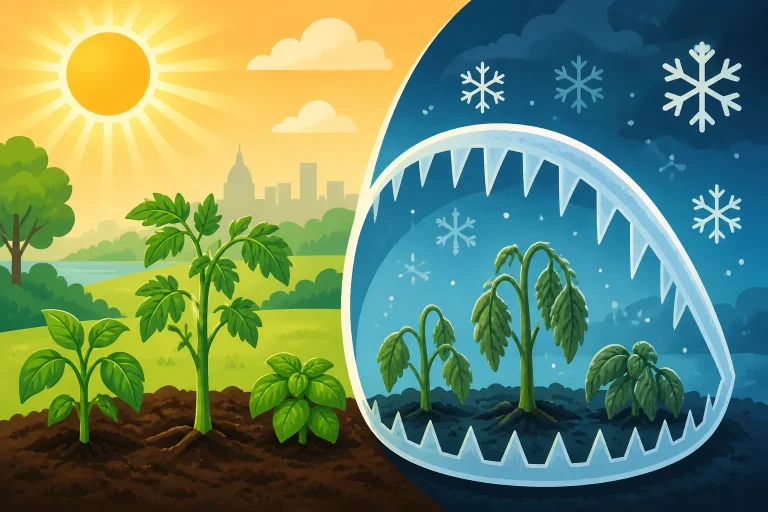
Spring forecasts can change, so check conditions repeatedly as planting approaches. Look beyond the current day and consider the expected overnight conditions, especially for tender plants. A pleasant afternoon can encourage a gardener to set out seedlings, but an unsettled forecast can make that choice risky.
Not every crop responds to cold in the same way. Some tolerate a cool spell better than others, while tender starts may be damaged or set back. Even when a plant survives, stress can slow its establishment. The goal is not to avoid every cool night; it is to match the crop and its stage of growth to conditions that are reasonable for it.
If plants are already outdoors, have a response ready before a cold night arrives. Temporary covering can reduce exposure in some situations, but the covering must be appropriate for the plants and secured so it does not injure them. Remove or adjust protection when conditions improve, and follow dependable crop guidance for the material and method being used. A cover is a backup, not a reason to plant far ahead of suitable conditions.
Before moving a tender crop outside, ask:
- Is the plant acclimated to outdoor conditions, or has it been kept in a protected indoor setting?
- Is the forecast stable enough for the crop?
- Can the plant be protected if conditions turn colder than expected?
- Is there a warmer, more sheltered place to set it temporarily?
- Would waiting avoid unnecessary stress without disrupting the rest of the garden plan?
Acclimation matters because a seedling raised indoors has not experienced the same light, wind, and temperature changes as a plant growing outside. Move it gradually through outdoor conditions in a way that follows reliable seed-starting guidance. Avoid assuming that a plant is ready simply because it has reached a certain size or because the calendar has reached Mother’s Day.
When cold weather is forecast, prioritize plants by vulnerability. Protect tender transplants first, and do not overlook containers, which can be exposed to changing temperatures more quickly than garden soil. If protection is not practical, postpone setting out the most sensitive crops. This may feel slower, but it reduces the chance of losing plants and having to restart.
For practical cover decisions, Covering Garden Vegetables When an Illinois Cold Snap Threatens and Protecting Sensitive Starts From Late Spring Freezes provide more detail. The key is to plan protection before the forecast becomes urgent, rather than improvising after plants are already exposed.
Build a Planting Plan Around the Holiday
A useful Mother’s Day plan includes tasks that do not depend on setting every crop outdoors. If the weather is favorable, you can plant crops suited to current conditions. If it is not, the weekend can still be productive: prepare labels, check seed packets, clear debris, organize supports, or improve access to beds without digging wet soil.
Start with a list of intended crops and divide it by planting method and cold tolerance. Mark which crops are intended for direct sowing, which are transplants, and which should wait for warmer conditions. Then compare those categories with the regional timing and the actual state of the garden. This creates a flexible schedule instead of a single date that can fail when weather shifts.
A practical workflow:
- Review the crop list and note the seed-packet or plant-tag guidance for each crop.
- Sort crops into cool-tolerant and warmth-loving groups.
- Check whether each bed is workable and has suitable drainage.
- Review the forecast, including the nights following the planned work.
- Plant only the crops that fit the current conditions.
- Keep tender starts protected or indoors when the weather does not support setting them out.
- Record what was planted and what conditions influenced the decision.
The record does not need to be complicated. Note the crop, the general location, and whether soil or weather delayed planting. Over time, those notes can show which beds warm quickly, where cold air tends to linger, and whether the garden’s schedule consistently differs from a broad regional calendar. For an approach to tracking patterns, see Keeping an Illinois Garden Journal for Varieties and Yields.
Succession planting can also make the season less dependent on a single weekend. Rather than sowing every suitable crop at once, follow crop-specific advice to make additional sowings when conditions and space allow. This can spread harvests and reduce the pressure to get the entire garden established immediately. The details vary by crop, so use a crop-specific schedule rather than applying the same interval to everything. Succession Planting for an Extended Illinois Vegetable Harvest can help with that planning.
If a cold, wet stretch interrupts planting, do not treat the delay as a failure. Use the pause to confirm the bed is ready, check supplies, and revisit the forecast. Some crops can be planted later than planned without turning the garden into a lost cause. A steady, crop-by-crop approach is more resilient than trying to complete every task on a holiday weekend.
Common Mother’s Day Planting Mistakes to Avoid
The most frequent problem is confusing a familiar date with a dependable signal. Mother’s Day makes planning memorable, but it cannot tell you whether the bed is wet, whether the nights are suitable, or whether a particular crop can handle the conditions. Use the holiday to evaluate the garden rather than to override it.
Another common error is applying one region’s schedule across the state. Southern Illinois, central Illinois, and northern Illinois do not share identical spring timing. A broad regional shift is useful, but it does not account for every yard, crop, and weather pattern. In particular, a planting date that seems comfortable in a warmer location may be premature farther north.
Planting all crops at once is another avoidable risk. Cool-tolerant crops and warm-season crops have different needs. Grouping them together can lead to tender plants being set out too early simply because other parts of the garden are ready. Make separate decisions for each crop instead.
Gardeners can also mistake a warm afternoon for a warm growing environment. Air temperature changes quickly, while soil may stay cool after a wet or chilly period. A tender crop placed into cold soil can struggle even if the planting day feels pleasant. Check soil condition and crop guidance rather than relying on how the air feels.
Working wet soil to stay on schedule can create longer-term problems. It may compact or smear, leaving a poor seedbed and making future cultivation harder. Waiting until the soil is workable can be the better use of time, even when the calendar suggests that planting should be underway.
Finally, avoid treating covers as a substitute for sound timing. Protection can help in a cold snap, but it cannot make every crop ready for every condition. If a crop is especially sensitive and the forecast is uncertain, delaying its move outdoors may be the more reliable choice.
A few habits make these mistakes less likely:
- Keep regional timing in view, but make the final decision at the garden.
- Separate crops by cold tolerance and planting method.
- Check the soil before digging or sowing.
- Watch overnight forecasts as well as daytime conditions.
- Keep a backup plan for exposed or tender plants.
- Accept that the best planting window may not match the holiday.
The goal is not to follow a perfect calendar. It is to give each crop a reasonable start under the conditions available in its part of Illinois.
Frequently Asked Questions
Should I plant the whole vegetable garden on Mother’s Day?
No. Use the holiday as a reminder to assess conditions, then make separate choices for cool-tolerant crops, warm-season crops, seeds, and transplants. Soil condition and the forecast matter more than the holiday itself.
Does southern Illinois always plant earlier than northern Illinois?
Not in every garden or for every crop. University of Illinois Extension describes a general regional difference, but local conditions, crop needs, and spring weather still affect the right planting window.
If the afternoon is warm, is it safe to set out tender seedlings?
Not necessarily. Check overnight conditions, soil readiness, and whether the seedlings have been acclimated to outdoor conditions. A warm afternoon alone does not show that conditions will remain suitable.
What should I do if the bed is still wet around Mother’s Day?
Avoid digging or working soil that is saturated. Use the time to review crop instructions, prepare labels, or organize supplies, then plant when the bed is workable.
Sources
- University of Illinois Extension — When to Plant | Home Vegetable Gardening | Illinois Extension | Illinois (checked November 15, 2026)
Disclaimer
This article is for general informational purposes only and does not constitute professional advice. Laws, prices and regulations vary by location and change over time. Consult a qualified professional for guidance on your specific situation. Illinois Gardening Guide is not a government agency and is not affiliated with any university extension, state department of agriculture or other government agency.