Chicagoland Hardiness Zones: Understanding 6a and Lake Warming
Chicagoland gardeners often see a hardiness zone on a plant tag and wonder whether it tells them what will survive in their yard—or when it is safe to plant. It helps with winter survival, but it cannot account for every local pocket or spring cold snap. Here’s how to interpret zone 6a, factor in Lake Michigan’s influence, and make planting decisions that fit your actual site.
What hardiness zone 6a tells you
A hardiness zone is a guide to how well a perennial plant may tolerate the coldest winter conditions in an area. It is useful when comparing trees, shrubs, and perennial flowers, especially plants expected to remain outdoors year after year. The label offers a starting point for judging winter survival, not a promise that a plant will thrive.
The USDA map divides areas into zones and sub-zones based on winter cold. The letter attached to a zone distinguishes a narrower sub-zone within that broader zone. A plant tag marked 6a, for example, gives gardeners a way to compare a plant’s cold tolerance with the zone shown for a location on the map. It does not tell you when spring will arrive, whether your soil drains well, or whether a particular plant suits the light and moisture in your yard.
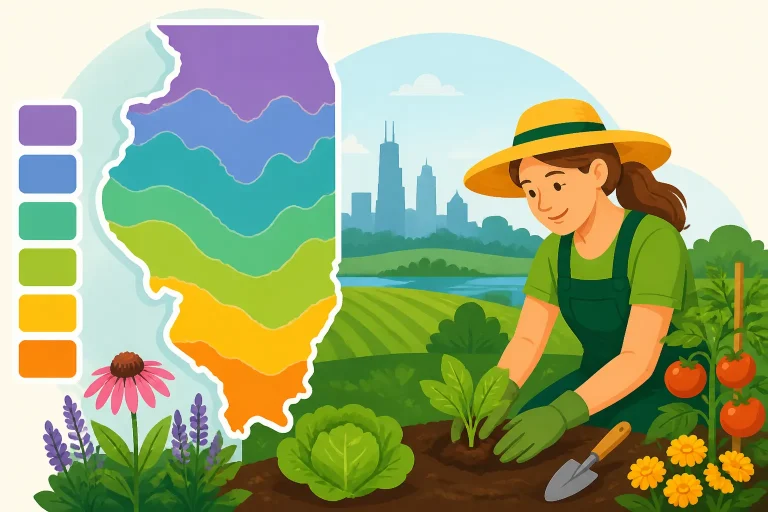
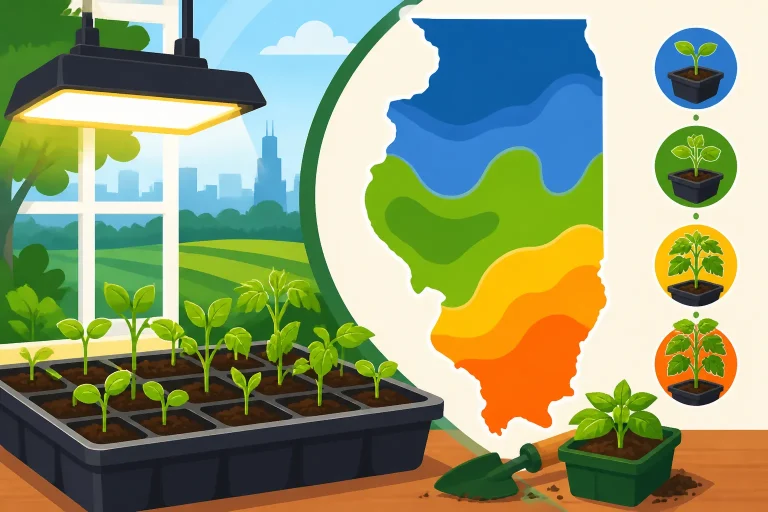
According to the University of Illinois Extension, the USDA 2023 plant hardiness map divides Illinois into six zones, with 12 sub-zones, ranging from zone 5a in northwestern Illinois to the newly added 7b zone in southern counties. That statewide range is a reminder that Illinois gardens do not share one uniform winter climate. It is also a reason not to treat a zone printed for one part of the state as a rule for another.
Zone 6a is part of the subject gardeners encounter when considering Chicagoland, but the title of a zone-focused article should not be taken as proof that every Chicago-area address falls in that sub-zone. Conditions vary across the region, and the appropriate way to check a location is to look it up on the USDA Plant Hardiness Zone Map. The map represents a broad area; a yard can still have conditions that differ from the mapped area around it.
If you are unsure how to locate your area on the map, Checking Your Illinois Zone by ZIP Code on the USDA Map can help with the map-reading step. A ZIP code lookup is useful for getting oriented, but it cannot identify every sheltered corner, low spot, or exposed bed on a property. For a closer look at the statewide pattern, see Illinois Planting Zones for Gardeners and Interpreting Illinois Hardiness Zones 5a Through 7b.
The most useful way to read a hardiness label is as a winter-survival filter. If a perennial’s listed zone is a poor match for the zone shown for your location, winter cold may make that plant a risky choice. If the label seems compatible, you still need to consider other growing conditions. A suitable zone does not guarantee success: the plant may be poorly matched to the soil, light, drainage, or amount of care available.
| What you want to know | What a hardiness zone can help with | What it cannot tell you |
|---|---|---|
| Whether a perennial may tolerate local winter cold | It offers a broad comparison between a plant’s cold tolerance and the mapped area | It does not guarantee survival in a particular yard |
| Whether a plant will thrive in a site | It can help you screen out plants that may be too vulnerable to winter cold | It does not describe light, soil, moisture, wind, or pests |
| When to plant vegetables outdoors | It gives useful background about winter conditions | It does not provide a frost date or a crop-by-crop planting window |
| Whether a lakeside bed is warmer than an inland bed | It can point to the broader mapped climate | It does not capture every local influence from Lake Michigan or nearby buildings |
Use the zone to narrow your choices, then use the specific needs of the plant and the conditions in your garden to make the final decision. For seasonal vegetables, the relevant question is usually not “What zone am I in?” but “What conditions does this crop need, and are they present yet?” For a perennial, winter hardiness matters more, but it is still only one part of the planting decision.
Why Chicagoland gardens can differ within the same mapped area
A hardiness map simplifies climate into broad zones. A garden is much more particular. Two properties that fall in the same mapped area can have different exposure, drainage, shade, wind, and stored warmth. Even within one yard, a sunny bed against a wall may behave differently from an open bed at the bottom of a slope.
These differences matter because plants respond to the conditions they actually experience. A sheltered planting beside a building may be less exposed to winter wind than one in an open yard. A low spot can collect cold air, while a slope may allow it to drain away. A tree canopy can block some wind and shade the soil, but it can also compete for water and light. The map cannot show those details, so gardeners have to observe their own sites.
Exposure and shelter
Wind can make an exposed planting site stressful, especially for plants that retain leaves through winter. A location protected by a fence, hedge, or building may feel less exposed than an open corner. Shelter does not change the zone printed on the map, and it does not make a tender plant reliably hardy. It can, however, change how harsh the conditions feel at that specific spot.
Protection can also come with trade-offs. A bed close to a wall may warm quickly when sunshine reaches it, but the wall can create shade at other times of day. A narrow sheltered space may not get enough air movement for plants that struggle with persistently damp foliage. Before choosing a plant for a sheltered pocket, look at the conditions throughout the growing season, not just on a cold winter day.
Elevation and cold-air movement
Cold air tends to settle in low areas rather than remain evenly distributed across a yard. A bed at the bottom of a slope may therefore experience conditions that differ from a higher, more open position nearby. The effect depends on the shape of the site and what surrounds it. Do not assume that every low spot is a frost pocket, but pay attention if cold-sensitive plants repeatedly show damage there while similar plants elsewhere in the yard do not.
Buildings, fences, dense planting, and other barriers can affect how air moves. A barrier may offer protection from wind, but it can also interfere with cold-air drainage. If a planting area seems to remain colder or wetter than the rest of the yard, repeated observation can help you decide whether the location—not the plant—is the problem.
Shade, pavement, and nearby structures
A sunny bed and a shaded bed can have different soil and air conditions even when they are close together. Nearby paving, walls, and buildings can absorb and release warmth, while shade can slow the warming of soil. These differences are most useful to a gardener as clues, not as a substitute for the hardiness map or for understanding what a plant needs.
The timing effect can be important for vegetable planting. A bed with morning shade or heavy, cool soil may not be ready when a sunny, well-drained bed seems workable. That does not mean the second bed is safe for every crop; it means local conditions should be considered alongside seasonal guidance. How Morning Sun and Shade Pockets Shift Garden Planting Dates explains why the same yard can contain different planting conditions.
Keep a simple record
You do not need special equipment to start learning your microclimates. Note which areas receive sun, where water tends to collect, which beds are protected from wind, and where plants show repeated winter or spring damage. Record observations over time rather than treating one unusual spell as a permanent pattern.
A garden journal is especially useful when you are comparing sites or deciding whether a plant is worth trying again. Note where it was planted, how exposed the spot was, and what happened after difficult weather. For vegetables, record when soil felt workable, when seedlings were set out, and whether cold or wet conditions caused problems. Keeping an Illinois Garden Journal for Varieties and Yields offers a way to organize those observations.
A record will not predict every season. Its value is that it helps distinguish a recurring site issue from a one-off weather event. If one bed repeatedly loses tender plants while a nearby bed does not, that difference can guide future placement. If a perennial survives but grows poorly, shade, drainage, or competition may be more relevant than its zone rating.
How Lake Michigan influences local conditions
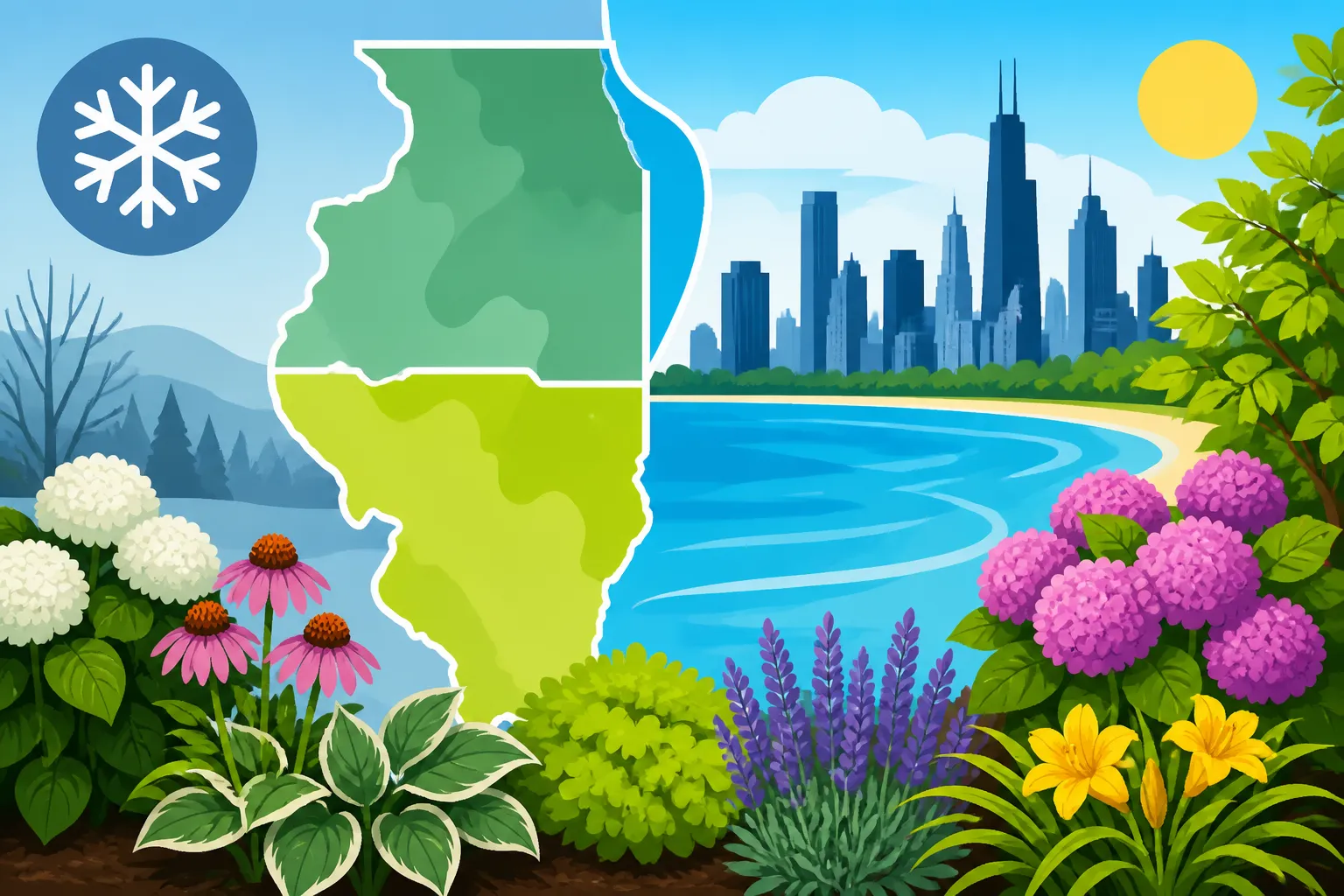
Lake Michigan can moderate temperatures near the shore, but “lake warming” should not be read as a guarantee that every lakeside garden is warmer in every season or at every hour. The lake is one influence among several. Its effect depends on where the garden sits relative to the water, the weather pattern, wind direction, and the particular site.
For gardeners, the practical takeaway is that proximity to the lake can make seasonal patterns less straightforward. A coastal bed may warm more slowly in spring than an inland bed, while nearby water can also reduce some temperature extremes. The effect can vary across the region and from one weather pattern to another. A broad hardiness zone cannot describe all of these short-term changes.
A milder winter does not mean an earlier spring
A garden near the lake may have a different winter experience from a garden farther inland, but that does not automatically mean the soil will warm sooner in spring. Cool air and water influence can delay warming in some conditions. Conversely, a sunny, sheltered city bed may warm more quickly than an exposed site farther from the shore. Local exposure and soil conditions still matter.
This is why gardeners should separate winter hardiness from spring planting readiness. A plant may be suited to the winter zone shown for the area and still be damaged if it is planted outdoors before it can handle the weather. For guidance on local differences near the lake, see Lake Shore vs Inland Chicagoland: Adjusting Your Planting Schedule and Chicagoland Lake Effect: When to Plant Vegetables Near the Water.
Avoid treating the shoreline as one climate
The lake’s influence is not a simple line on a map. Gardens at different distances from the water can experience different combinations of wind, exposure, shade, and built-up surroundings. Even two coastal neighborhoods can have different conditions because one yard is open to lake winds and another is sheltered by buildings or vegetation.
A gardener’s location relative to the shoreline is useful context, not a complete planting instruction. Compare your site with nearby gardens, but do not assume a neighbor’s success guarantees the same result in your yard. A sunny courtyard may be warmer than an exposed garden only a short distance away. A low, damp area may stay cool even where the surrounding neighborhood feels mild.
Use observation rather than a blanket adjustment
It is tempting to move every planting date earlier or later based on the lake. That can create problems if the local effect is different from what you assumed. Instead, watch how the soil and plants respond in your own garden. If your beds tend to remain cool and wet in spring, wait for workable soil rather than following a date that does not fit the site. If a protected bed warms earlier, continue to account for the possibility of a cold snap.
The same approach applies to perennials. A lake-influenced winter may not match the conditions in an inland reference garden, but the plant still needs a suitable site and care. Use the map for broad winter context, then consider the actual exposure and conditions of the planting location. Avoid treating a mild spell as proof that a plant is safe from a later return to cold.
Hardiness zones are not planting calendars
A hardiness zone is not a schedule for sowing seeds, transplanting vegetables, or moving tender plants outdoors. It does not give a last spring frost date, a first autumn freeze date, or a soil-temperature threshold. Those decisions depend on the crop, the season, and current local conditions.
This distinction is especially important for vegetables. Many crops are grown for one season rather than left outdoors through winter, so their success depends more on suitable growing conditions than on the winter hardiness label. Cool-season crops and warm-season crops respond differently to cold soil and chilly nights. A general zone rating cannot replace crop-specific advice.
For an overview of seasonal timing across the state, use Illinois Vegetable Planting Calendar: Month-by-Month Sowing and Illinois Planting Dates by Region: Spring and Fall Schedules. For a closer look at the difference between seasonal timing and the length of time crops have to mature, see Understanding the Growing Season in Illinois. These resources address questions that the winter hardiness map is not designed to answer.
Do not confuse last frost with zone
A hardiness zone helps describe winter cold; it does not tell you that the danger of frost has passed. Spring weather can vary, and a warm stretch does not guarantee that cold weather will not return. Tender vegetables and flowers can be damaged by conditions that a hardy perennial might tolerate.
For early planting decisions, use local freeze information and crop requirements rather than assuming a zone label sets a safe date. How to Use Spring Freeze Odds When Timing Early Garden Sowing explains how to think about freeze risk, while Covering Garden Vegetables When an Illinois Cold Snap Threatens focuses on protecting plants when colder weather threatens.
Soil readiness is a separate question
Even when the air feels mild, soil can remain cold, wet, or difficult to work. Digging or planting into saturated soil can damage its structure and create problems for roots. If the soil sticks heavily to tools or forms a dense mass, it may be better to wait until it is workable. The hardiness zone cannot tell you whether your bed is ready to dig.
Use soil condition as a direct signal. A bed that drains slowly or remains cool under shade may need more time than a raised or well-drained bed nearby. For a practical check before digging, see Testing Soil Readiness: Using the Squeeze Test Before Digging. For crop-specific questions about cold ground, Which Vegetables Tolerate Illinois Spring Frosts and Cold Ground? can help you distinguish resilient choices from crops that need warmer conditions.
Frost protection does not change the zone
Row covers, cloches, and other protections can reduce exposure during a short cold spell, but they do not change the plant’s hardiness rating or the area’s mapped zone. Protection can be useful when a cold snap threatens vulnerable seedlings, yet it is not a substitute for choosing plants suited to the site or waiting for appropriate conditions.
If you use a cover, make sure it is suited to the situation and does not create other problems for the plants. Monitor conditions rather than assuming a covered bed is automatically safe. The purpose is to reduce risk, not to make any plant suitable for any season. Using Row Covers to Plant Earlier in Illinois discusses how covers can support earlier planting, while Protecting Sensitive Starts From Late Spring Freezes addresses the vulnerability of young plants.
Choosing plants for a Chicagoland site
A hardiness label is most helpful when you use it as one part of a larger selection process. Start by identifying the conditions a plant needs, then compare those needs with your actual site. A perennial with an appropriate cold rating may still fail if it is planted in heavy, poorly drained soil when it needs excellent drainage, or in deep shade when it needs full sun.
For trees and shrubs, consider their mature size as well as winter tolerance. A plant that survives the cold but outgrows its space can become a long-term maintenance problem. For perennials, check whether the site suits the plant’s light and moisture preferences and whether it will have room to grow. For vegetables, prioritize growing-season needs, soil conditions, and the crop’s response to cool or warm weather.
Read the whole plant label
Use the label to gather more than a zone. Look for the plant’s preferred light, moisture, soil, and mature size. If the label gives a hardiness range, compare it with the mapped zone for your location, but remember that a range does not promise equal performance throughout every site in that area.
If a plant is near the edge of its listed hardiness, be cautious about placing it in an exposed or poorly drained spot. Choose a more protected site if the plant’s other needs are met, or select a plant with a better cold-tolerance fit. A sheltered position may help, but it cannot erase the plant’s limits or guarantee survival in unusually harsh conditions.
For a new garden, it can be sensible to begin with plants that are well suited to the local site rather than trying to push the edge of what may survive. This is not a rule against experimenting. It is a way to reduce avoidable losses while you learn which parts of your property are warm, cool, wet, dry, sunny, or exposed.
Match the plant to the bed, not just the ZIP code
A map lookup provides regional context. It does not tell you which bed is best. Before planting, consider whether the location is open or sheltered, sunny or shaded, well drained or slow to dry, and exposed to strong wind or protected by nearby features. Then compare those conditions with the plant’s stated needs.
For edible crops, site preparation matters just as much as timing. A sunny, well-drained area may suit a vegetable bed better than a shaded space where soil stays wet. If you are working with compacted or heavy soil, improve the bed carefully rather than trying to compensate by choosing a different zone rating. Siting an Illinois Vegetable Plot for Sunlight and Soil Drainage covers those site decisions, and Raised Beds vs. In-Ground Beds for Heavy Illinois Clay can help when drainage and soil structure are concerns.
Use records to test uncertain choices
When you are unsure whether a plant will work in a particular microclimate, start with a small planting rather than committing the whole bed. Keep track of where it went, the conditions around it, and how it performed through the seasons. If it struggles, check for several possible causes before blaming the zone: water stress, unsuitable soil, poor drainage, excessive shade, competition, or damage from pests.
A plant’s survival alone is not the only measure of success. It may persist but flower poorly, grow slowly, or need more attention than you want to provide. If the goal is a low-maintenance planting, choose species that suit both the broad climate and the specific site. Choosing the Right Tree for Your Illinois Yard: Spot by Spot and Matching Native Illinois Species to Light, Moisture, and Space offer ways to think beyond the zone label.
A practical way to use the map and plan plantings
The goal is not to find a single number that answers every gardening question. It is to combine a map lookup with observations of the site and the needs of each plant. The following process keeps the different decisions separate and makes it easier to adjust when conditions do not match your expectations.
- Look up the location on the USDA map. Use the mapped zone as regional guidance for winter hardiness. Do not assume a whole suburb or shoreline area shares one exact site condition.
- Write down the garden’s local conditions. Note sun, shade, wind exposure, drainage, and nearby buildings, pavement, trees, or slopes. Add observations about spots that stay wet or feel unusually sheltered.
- Check the plant’s needs. Compare its hardiness information with the mapped location, then review light, soil, moisture, and mature size. Do not use the zone rating as a substitute for those details.
- Separate perennial choices from vegetable timing. Use winter hardiness to help screen long-lived plants. Use crop-specific seasonal guidance, soil readiness, and current weather conditions for vegetable sowing and transplanting.
- Observe the site through changing weather. A warm spell, cold snap, or wet spring can reveal how a bed behaves, but one event does not define every season. Keep notes and look for recurring patterns.
- Adjust the planting location or plant choice when needed. If a plant repeatedly struggles in one spot, consider whether exposure, drainage, shade, or soil is a better explanation than the mapped zone alone.
- Check current local guidance when timing is uncertain. Freeze risk, weather, and garden conditions vary. For schedules and probabilities, rely on the relevant local or crop-specific information rather than deriving a date from the hardiness zone.
This process also helps with decisions that seem connected but are not interchangeable. A plant can be suitable for the region’s winter climate yet need a different bed. A vegetable can be appropriate for the garden but still be planted too early into cold, wet soil. A lake-influenced site can experience different seasonal conditions from an inland bed without changing the usefulness of the map as a broad reference.
Avoid making a single adjustment to every plant based on a general idea that Chicagoland is warmer, colder, earlier, or later. A garden near the lake, a sheltered urban courtyard, and an exposed inland yard may each have different strengths and limits. Let the zone answer the winter-hardiness question, then use the site and season to answer the rest.
Frequently Asked Questions
Does the hardiness zone tell me when to plant vegetables?
No. It helps with broad winter-hardiness comparisons, especially for plants that remain outdoors year after year. Vegetable sowing and transplanting depend on crop needs, soil conditions, and seasonal weather. Use a planting calendar and current local guidance rather than treating the zone as a planting date.
Does Lake Michigan make every nearby garden warmer?
No. The lake can influence local conditions, but the effect varies with location, wind, exposure, and the layout of a garden. A sheltered lakeside bed and an exposed one may behave differently. Observe your own site instead of applying one adjustment to every planting.
Is a plant guaranteed to survive if its label matches my zone?
No. A matching rating is useful evidence about winter cold tolerance, not a guarantee. Drainage, soil, light, exposure, plant health, and the conditions of a particular winter also matter.
Should I use a ZIP code lookup for my garden?
It is a useful way to find the general mapped zone for an area. It cannot show every microclimate in a yard, so use it as a starting point and then consider the conditions of the specific planting spot.
Sources
- University of Illinois Extension — Shifting USDA plant hardiness map reflects changing climate, changes for plants | Illinois Extension | Illinois (checked November 15, 2026)
Disclaimer
This article is for general informational purposes only and does not constitute professional advice. Laws, prices and regulations vary by location and change over time. Consult a qualified professional for guidance on your specific situation. Illinois Gardening Guide is not a government agency and is not affiliated with any university extension, state department of agriculture or other government agency.