Illinois Indoor Seed-Starting Guide: Regional Calendars by Zone
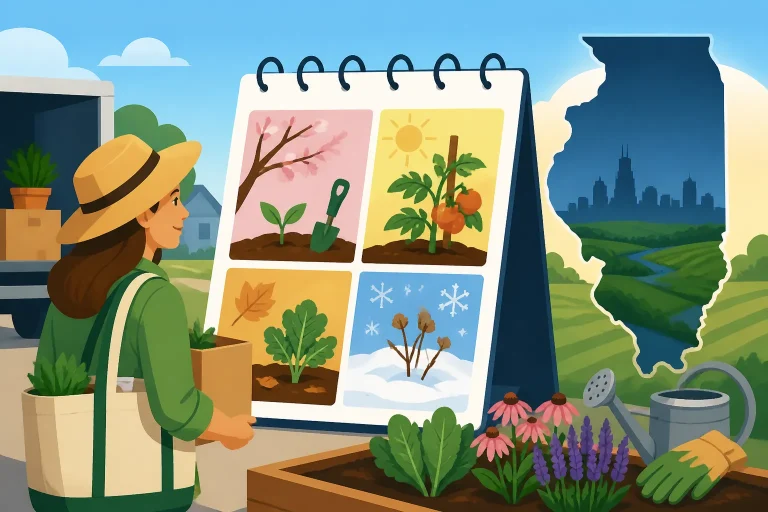
Starting seeds indoors can save time and expand your crop choices, but sowing too early can leave seedlings cramped before the garden is ready. Illinois gardeners also face different spring conditions from north to south. This guide shows how to build a flexible indoor seed-starting calendar around your region, seed packets, and actual planting conditions.
Why an indoor seed-starting calendar needs local adjustments
An indoor seed-starting calendar is a planning tool, not a promise that a crop can go outside on a particular day. Seeds may germinate and grow indoors on schedule, yet cold soil, chilly nights, or a wet garden bed can delay transplanting. A workable plan accounts for both stages: when to sow indoors and when conditions may let seedlings move outdoors.
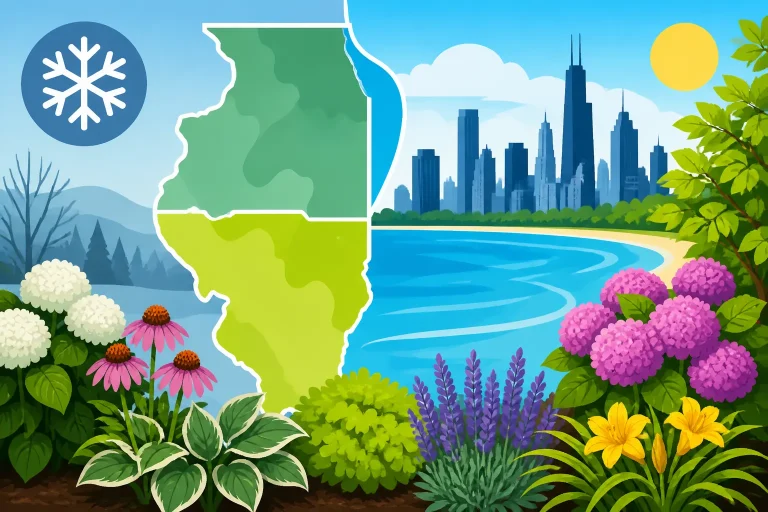
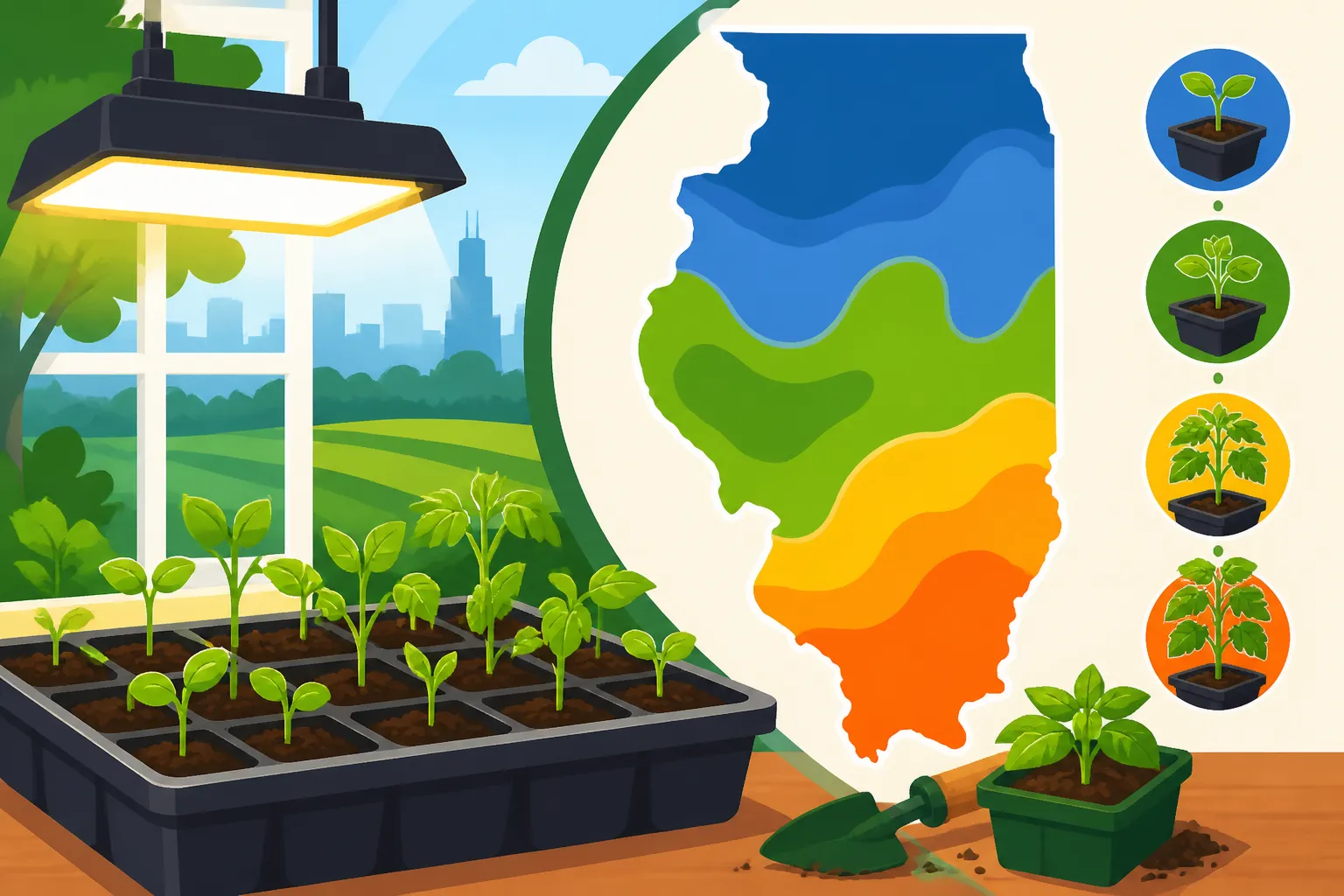
Illinois stretches across a broad range of spring weather. A schedule that works for a gardener in the south may be premature farther north. Even within the same region, sheltered city gardens, open rural plots, low-lying areas, and lakeside yards can warm at different rates. Use regional guidance to find a starting point, then pay attention to your own growing space.
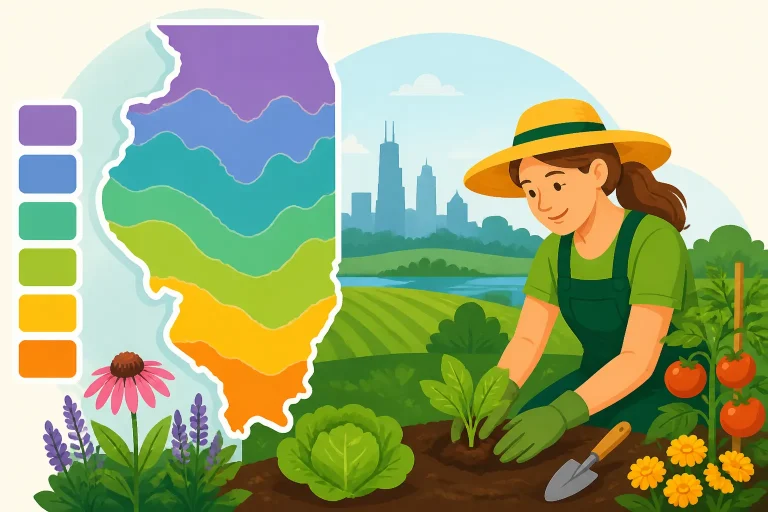
According to University of Illinois Extension, Southern Illinois gardeners can generally start crops two weeks earlier than central Illinois gardeners. According to University of Illinois Extension, Northern Illinois gardeners can plant about two weeks later than central Illinois gardeners. These regional differences are useful when adapting a central Illinois reference calendar, but they do not make a specific sowing date right for every crop or garden.
A hardiness zone can help you compare a location’s winter climate with another location’s, but it does not tell you exactly when to sow a seed indoors. A seedling’s readiness depends on the crop, its growth rate, the conditions indoors, and the weather outside. For broader context on the map and its limits, see Illinois Planting Zones for Gardeners and Interpreting Illinois Hardiness Zones 5a Through 7b.
Start with three pieces of information:
- Your regional starting point: Southern, central, or northern Illinois is a practical first distinction for adapting a calendar.
- The crop’s instructions: Seed packets can indicate whether a crop is best sown indoors, sown directly in the garden, or handled either way.
- The likely outdoor planting window: Plan backward from the conditions the crop needs outdoors, rather than choosing an indoor sowing date just because spring feels close.
A calendar becomes more reliable when you record what happens in your own garden. Note when you sowed, how quickly the seedlings grew, whether they became crowded, and when they were ready to move outdoors. Over time, these observations help you adjust general recommendations to your home’s light, indoor temperature, and outdoor microclimate. Keeping an Illinois Garden Journal for Varieties and Yields offers ideas for tracking those patterns.
How to build a regional calendar without relying on fixed dates
A useful calendar connects each crop to an outdoor planting window and then works backward to an indoor sowing window. It should not be a single list of dates to follow regardless of weather. Instead, treat it as a set of crop-specific notes that you can revise when spring conditions shift.
Begin with the seed packet
Read the packet before buying supplies or setting up trays. Look for whether the crop is intended for direct sowing, indoor starting, or either method. Check any guidance about transplanting and the conditions the young plant needs. Some crops do not benefit from being started indoors; a seed packet may recommend sowing them in the garden instead.
Packets also help you compare crops. A crop that takes a long time to mature may make indoor starting appealing, while another may catch up quickly when sown outdoors. The packet’s growing instructions are more useful than a generic rule that every vegetable should be started inside.
If you are comparing packets from different sellers, look for the same basic information: crop identity, sowing method, and any timing or transplant guidance provided. Botanical Interests seed packets can be one reference when planning from packet instructions, but apply the directions for the specific crop and variety you have. Do not assume that all crops, or all varieties within a crop, follow identical schedules.
For more help interpreting packet language, see Reading Seed Packets and Maturity Days for Illinois Gardeners. When maturity information is listed, use it as a planning aid rather than a guarantee; outdoor temperatures, light, soil conditions, and care all influence how plants develop.
Choose a realistic outdoor window
Before deciding when to sow indoors, decide when a seedling might reasonably be planted outside. The answer depends on the crop’s tolerance for cool conditions and the state of your garden bed. A cold-tolerant crop may be ready for outdoor conditions when a tender warm-season crop is not. Neither should be moved outside just because it has reached a certain size indoors.
Think about the place where the crop will grow. A sunny, well-drained raised bed may become workable before a heavy, wet in-ground bed. A plot exposed to wind can feel less hospitable to young plants than a protected spot near a building. These conditions can shift your practical planting window even when two gardeners use the same regional calendar.
The Illinois Frost Dates Guide: Spring Thaw to Autumn Freeze can help put seasonal frost expectations into context. Frost dates are planning references, not a promise about the weather on a particular day. Check current conditions before moving vulnerable plants outside, and keep a backup plan if a cold spell is forecast.
Work backward from the intended planting time
Once you have a tentative outdoor window, check the packet for guidance on how far ahead to start indoors. Use that crop-specific instruction to count backward on your calendar. If the packet does not give clear guidance, look for crop-specific recommendations from a reliable gardening reference rather than applying the same indoor-starting interval to every seed.
Keep a distinction between a sowing window and a target transplant window. The indoor sowing window is when you plan to put seeds in their trays. The transplant window is when seedlings may be ready and outdoor conditions may be suitable. Writing both in your calendar makes it easier to see whether the schedule is realistic.
Use a flexible note such as “start when the garden is approaching its cool-crop window” rather than treating a date from another region as a fixed instruction. If you do use a date-based reference, mark it as provisional. A late cold spell or slow-growing seedling can change the plan.
Adjust the starting point by region
If you are using a central Illinois calendar, adjust it for your location rather than copying it unchanged. Southern and northern gardeners can use the regional guidance from University of Illinois Extension as a broad comparison, then check crop-specific instructions and local conditions. The guidance helps with scheduling, but it does not mean that every seed should be started earlier or later by the same amount.
For a more detailed approach to comparing regional schedules, see Illinois Planting Dates by Region: Spring and Fall Schedules and Timing Indoor Vegetable Seed Starts Across Three Illinois Regions. Those resources can help you organize the calendar, while your packet and garden conditions determine how to apply it.
A regional schedule is especially helpful when you move within Illinois or start gardening in a new area. Avoid assuming that habits from a previous home will transfer directly. A nearby town may have different exposure, elevation, or urban heat effects, and the garden itself may warm more slowly or quickly than the surrounding landscape. Building a Local Illinois Garden Calendar After an Out-of-State Move discusses how to make a calendar that reflects a new location.
A crop-group calendar for indoor starting
The table below is a framework for organizing crops, not a set of exact dates. Use the seed packet and local planting guidance to fill in the windows for the crops you actually plan to grow. “Start indoors” is not automatically the best choice for every crop in a group; check whether the crop can be transplanted successfully and whether the packet recommends starting it inside.
| Crop group | How to decide whether to start indoors | What to check before sowing | What to watch for before planting outside |
|---|---|---|---|
| Cool-season crops | Compare indoor starting with direct sowing; choose the method recommended for the crop | Packet instructions, local cool-crop window, and whether the crop tolerates transplanting | Bed readiness, soil condition, and forecast conditions |
| Warm-season crops | Indoor starting may help when the packet recommends it and the outdoor window is still ahead | Crop-specific sowing guidance and the conditions needed after transplanting | Warm enough soil, suitable nights, and a forecast that will not expose tender plants to damaging cold |
| Long-season crops | Consider indoor starting when the crop needs a head start and can be transplanted without undue stress | Packet’s sowing and transplant directions; available indoor light and space | Whether plants are still manageable and outdoor conditions suit the crop |
| Crops generally sown directly | Follow the packet’s direct-sowing recommendation unless trusted crop-specific guidance says otherwise | Sowing depth or method and the garden conditions needed for germination | Whether soil and weather are suitable for direct sowing |
| Herbs and other edible plants | Decide by species; do not assume all herbs share a calendar | Packet or plant label, growth habit, and whether the plant is suited to indoor starting | The plant’s tolerance of outdoor conditions and the planting location |
| Flowers grown from seed | Use instructions for the specific flower rather than a vegetable calendar | Whether it is best sown indoors or directly outdoors and how it responds to transplanting | Bed or container conditions and the plant’s needs after moving |
Cool-season crops
Cool-season crops are often considered early in the spring plan, but that does not mean every crop in this group should be started indoors. Some are well suited to direct sowing. Others may be started indoors if the packet recommends it and if you can move them outdoors at an appropriate stage. The best choice depends on the crop and your goal: an earlier harvest, a predictable number of plants, or a simpler sowing process.
When considering indoor starting, ask whether the crop handles transplanting well. A crop that resents root disturbance can lose the advantage of an indoor head start. If the packet recommends direct sowing, follow that instruction unless crop-specific guidance supports a different approach.
For a closer look at the timing of spring greens, see Timing Cool-Season Greens for Illinois Spring Harvests. If you want to compare which crops can tolerate spring cold, Which Vegetables Can Go In Before the Last Illinois Frost? can help you plan outdoor sowing and planting decisions.
Warm-season crops
Warm-season crops need a different approach. Seeds may germinate indoors before the garden is ready, but seedlings can become stressed if they outgrow their containers while waiting for suitable outdoor conditions. Start with the crop’s packet instructions, then check whether the outdoor window is likely to arrive while the seedlings are still at a manageable stage.
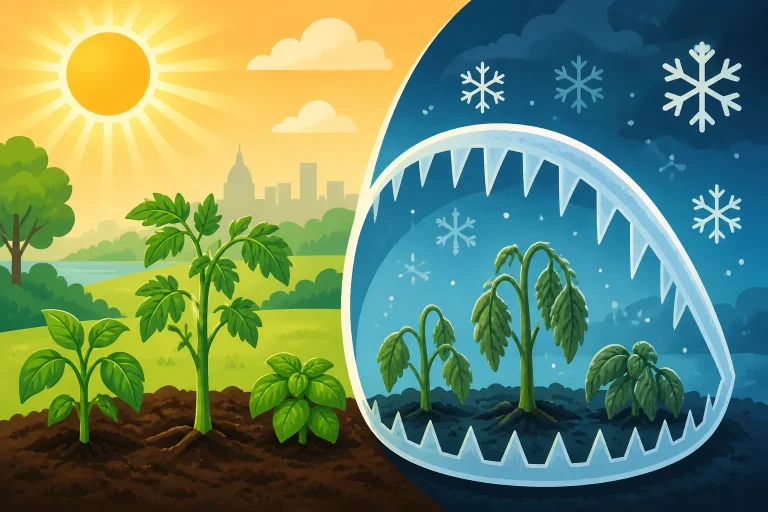
Avoid treating a brief spell of warm weather as proof that the garden is ready for tender plants. Soil can remain cool after a sunny day, and nighttime conditions may turn cold again. A good plan has a practical backup: keep seedlings protected indoors until the outdoor conditions suit the crop, or delay sowing if your indoor setup cannot hold plants comfortably while they wait.
Waiting Past Early Warmth to Plant Tomatoes and Cucumbers and Why Mid-May Ground Temps Matter More Than an April Heat Wave address the risk of letting a short warm spell push planting ahead of the season. For general guidance on how Illinois spring temperatures affect sowing, see Spring Temperatures for Sowing Illinois Garden Beds.
Long-season crops and limited-space gardens
Some gardeners start crops indoors because the crop takes a substantial part of the growing season to mature, or because they want to use a small garden area efficiently. That can be helpful, but indoor starting only works when the seedlings receive suitable conditions and are moved outdoors at the right stage. Crowded plants or weak indoor growth can cancel out the benefit of starting early.
A small indoor area calls for selectivity. Starting every crop at once can fill shelves before the outdoor garden is ready. Choose crops that benefit most from the method, then leave direct-sown crops for the garden. A small, well-managed set of seedlings is often easier to care for than trays of plants that are not suited to transplanting or that cannot be accommodated outdoors.
If you are starting seeds in a limited footprint, Small-Space Vegetable Gardening in Illinois: Containers and Beds and Starting Garden Crops Early for Double Harvests offer related planning ideas. Use them alongside crop-specific seed instructions rather than treating indoor starting as a shortcut for all vegetables.
Set up a seed-starting schedule you can manage
A reliable calendar is only useful if you can carry it out. Before sowing, make sure there is space for trays, light for emerging seedlings, a way to keep the growing medium appropriately moist, and a plan for gradually adapting plants to outdoor conditions. The setup does not need to be elaborate, but seedlings need consistent attention.
Plan the indoor space before sowing
Choose a location where you can check the trays regularly. Make sure the area suits the needs of the crops you plan to start and that there is enough light as seedlings grow. A windowsill may seem convenient, but the available light, room temperature, and space can vary. If seedlings begin leaning strongly toward a light source or growing thin and weak, reassess the setup rather than assuming the calendar is the only problem.
Group crops with similar needs when practical, but label each tray clearly. A label should identify the crop and, if helpful, the sowing date or variety. Labels reduce confusion when different seeds germinate at different speeds or look alike at an early stage. Keep the packet or a record of its instructions with your planning notes.
Make sure containers drain and that the growing medium is appropriate for seed starting. Do not rely on garden soil in a tray simply because it is available; seed-starting mixes are designed for containers and differ from soil in a garden bed. Avoid letting trays sit in water for long periods. Too much moisture can create problems, while a tray that dries out can interrupt germination or stress seedlings.
Sow only what you can care for
It is easy to sow more seeds than the garden can hold. Before filling trays, decide how many plants you actually need and where they will go. Consider the mature size of the plants and the space available in the bed. A full tray may seem reassuring early in the season, but surplus seedlings require light, room, water, and time.
If you want extra plants as insurance, make that a deliberate choice. Do not start extra seeds solely because germination is uncertain if the packet or your past records suggest a different amount is more appropriate. Record the outcome and adjust future sowings based on what you learn.
A calendar can include a simple status for each crop:
- Planned: The crop is on your list, but sowing has not begun.
- Sown: Seeds have been planted indoors or directly outdoors.
- Growing: Seedlings have emerged and need routine care.
- Ready to assess: Plants may be approaching the outdoor transition, but conditions still need checking.
- Planted outside: The crop has moved to its intended garden location.
These labels are planning aids rather than rules. They help you see what needs attention without confusing seed emergence with readiness to transplant.
Track germination and growth
Record when seeds emerge and how seedlings develop. If a crop takes longer than expected, check the packet and the conditions in the tray before resowing. A slow start can reflect unsuitable moisture, temperature, seed age, or other conditions; it is not always a sign that the calendar itself is wrong.
Use clean containers and avoid crowding seedlings. If multiple seedlings emerge close together, follow crop-specific guidance for thinning or separating them. Handle young plants carefully, especially when roots are tangled or delicate. Where a crop does not transplant well, it may be more practical to sow directly outdoors next time.
Keep notes that will answer useful questions later: Did the seedlings reach a manageable size before the garden was ready? Were they stretching for light? Did they stall after transplanting? Did your indoor sowing happen too early for the conditions outside? A record of the actual sequence helps you improve timing without relying on memory.
For additional help planning from seed-packet maturity information, see Reviewing Seed Packets for Days to Harvest Before Planting Plots. A calendar and a journal work well together: the calendar helps you plan ahead, while the journal shows what actually happened.
Prepare seedlings for outdoor life
Moving a seedling from a sheltered indoor space straight into a garden bed can be a shock. Outdoors, plants encounter stronger light, wind, and changing temperatures. A gradual transition can help seedlings adjust. Do not treat hardening off as an optional step simply because a plant looks sturdy indoors.
Harden off gradually
Begin by exposing seedlings to outdoor conditions in a protected place, then increase their exposure as they tolerate it. Avoid starting the transition during severe weather or leaving tender plants in harsh sun or strong wind before they have adjusted. Bring plants back to a protected area when conditions could damage them.
The process should respond to weather and plant condition. If leaves wilt or show stress, pause or reduce exposure rather than pushing ahead to meet a calendar date. A sheltered porch or protected garden spot may help, but the right location depends on the plant and the conditions. Avoid leaving trays unattended where they may dry out or be knocked over.
A gradual transition prepares seedlings for the change in light and air movement, but it does not make a tender crop frost-proof. Continue checking the forecast, and use crop-specific guidance to decide whether the plants can be left outside or need protection.
Check the bed before planting
A seedling may be ready while the bed is not. Check whether the soil is workable rather than saturated, and consider whether the crop’s needs match the conditions in the intended spot. Digging or planting into very wet soil can damage its structure. A bed that drains poorly may also be a poor fit for a crop that needs drier conditions.
The location matters as much as the date. A sunny, exposed bed can behave differently from a sheltered space. Consider light, drainage, wind, and nearby structures or trees before transplanting. For help assessing a site and soil, see Siting an Illinois Vegetable Plot for Sunlight and Soil Drainage and Guide to Soil Drainage and Compaction in Illinois Yards.
If you are preparing a new bed, avoid making last-minute changes that leave the soil compacted or difficult to work. Timing Raised-Bed Soil Preparation Two Weeks Before Planting covers one type of bed-preparation plan, while Illinois Vegetable Garden Soil Fertility and Organic Nutrition Guide provides broader soil-planning context. Follow the instructions for any soil amendment or fertilizer you use.
Transplant with care
When conditions are suitable, handle seedlings gently and follow the planting guidance for the crop. Avoid pulling a plant by its stem. Keep roots from drying during the move, and settle the seedling into its intended growing position without rough handling. If roots have filled the container or growth has stalled, consult crop-specific advice before deciding whether to transplant, pot up, or replace it.
Watering after planting can help settle soil around roots, but avoid keeping the bed continually saturated. Watch seedlings during the days after transplanting. Temporary stress can occur, but persistent wilting, yellowing, or stalled growth calls for a closer look at moisture, roots, weather exposure, and planting conditions. Diagnosing Yellow, Wilting, or Stunted Illinois Vegetable Plants can help with common symptoms.
Troubleshoot a calendar that is not working
If indoor seedlings are consistently ready too early, the calendar is probably starting that crop too soon for your garden or your indoor setup. If they are too small when the outdoor window arrives, the sowing plan may need to move earlier, or the indoor growing conditions may need attention. Make adjustments crop by crop instead of shifting every sowing at once.
Seedlings are too large before the bed is ready
Overgrown seedlings may become crowded, difficult to handle, or stressed while waiting. First ask whether the crop was started earlier than the packet guidance or local schedule calls for. Then consider whether you can improve the indoor conditions, such as providing more suitable light or space. If waiting is unavoidable, avoid neglecting the plants or keeping them in conditions that encourage weak, stretched growth.
For the next season, move that crop’s indoor sowing later or choose a crop better suited to your available space. Do not assume that starting earlier will always give you a stronger or earlier harvest. The goal is to have a healthy, manageable seedling when outdoor conditions become appropriate.
Seedlings are small when planting time arrives
Small seedlings may result from late sowing, poor light, unsuitable moisture, or another issue affecting growth. Review the sowing date and how the plants developed. If several crops are small, look for a shared problem in the indoor environment. If just one crop is affected, check its specific packet instructions and growing needs.
Do not rush a weak seedling outdoors just to follow the calendar. A healthy plant that waits a little longer in suitable conditions may fare better than a stressed plant moved into unsuitable weather. If the planting window is passing, use crop-specific guidance to decide whether the seedling can still be planted or whether direct sowing or a later crop is a better option.
Seeds fail to emerge
Check the seed packet for germination guidance and review the conditions in the tray. The growing medium may have dried out, remained too wet, or otherwise been unsuitable. Seed age can also matter. If the reason is unclear, test a small amount of remaining seed under suitable conditions rather than repeating a large sowing without knowing whether the same problem will recur.
Keep seed trays labeled and note what happened. If one crop repeatedly fails under your conditions, adjust the method or consider another crop that better suits the space and schedule. Checking Germination Rates on Leftover Vegetable Seed Packets discusses a way to assess older seed before committing garden space to it.
The weather changes after transplanting
A forecast can change after seedlings are outdoors. If cold conditions threaten, protect vulnerable plants using an approach appropriate for the crop and the expected weather. Make sure any cover is supported and does not injure the plants, and remove or adjust it as conditions change. A cover can reduce exposure, but it does not guarantee safety in every cold event.
If a plant is damaged, assess it after conditions improve rather than pulling it immediately. Some seedlings recover while others do not. Record the crop, its location, and the conditions it faced so that you can decide whether that part of the garden needs a different planting plan next time. For practical options when a cold snap threatens, see Covering Garden Vegetables When an Illinois Cold Snap Threatens and Protecting Sensitive Starts From Late Spring Freezes.
The same calendar gives different results in different beds
A sunny bed near a building may warm differently from an open plot, while shade or wet soil can delay readiness. Treat your garden as a collection of growing conditions, not a single uniform space. If you have multiple beds, note which ones are warmer, windier, wetter, or more sheltered. This can help you place crops and stagger planting without changing the entire calendar.
For more on how local conditions alter timing, see Microclimates Across Northeastern Illinois Urban and Rural Yards and How Morning Sun and Shade Pockets Shift Garden Planting Dates. When you compare gardens or calendar recommendations, make sure the growing conditions are actually comparable.
Frequently Asked Questions
Should I start all my vegetable seeds indoors?
No. Use the seed packet to determine whether a crop is suited to indoor starting, direct sowing, or either method. Some crops do not gain much from being started indoors, and some may be difficult to transplant.
Can I use a hardiness zone to choose an indoor sowing date?
A hardiness zone can provide useful climate context, but it does not give a crop-specific indoor sowing date. Use regional planting guidance, packet instructions, and your garden’s conditions together.
What should I do if a seedling is ready before the weather is suitable?
Keep it in appropriate growing conditions and monitor its space, light, and moisture while you wait. Do not move a tender seedling outdoors solely because it has reached a certain size; check the crop’s needs and the forecast.
Does a regional calendar guarantee that plants can go outside on schedule?
No. A regional calendar is a planning reference. Weather, soil readiness, crop tolerance, and conditions in your garden can all change the practical planting window.
Sources
- University of Illinois Extension — When to Plant | Home Vegetable Gardening | Illinois Extension | Illinois (checked November 15, 2026)
Disclaimer
This article is for general informational purposes only and does not constitute professional advice. Laws, prices and regulations vary by location and change over time. Consult a qualified professional for guidance on your specific situation. Illinois Gardening Guide is not a government agency and is not affiliated with any university extension, state department of agriculture or other government agency.