Does a Warmer Hardiness Zone Mean Earlier Spring Sowing?
A warmer hardiness zone can look like a signal to start sowing earlier, but it measures winter cold—not whether spring soil is ready. That distinction matters across Illinois, where a mild spell can be followed by chilly nights or cold, wet ground. Use the zone map for perennial winter survival, then time vegetable sowing by crop needs and conditions in your own garden.
What a warmer hardiness zone actually tells you
A hardiness zone is useful, but it answers a different question from the one many spring gardeners have. It helps describe the winter conditions relevant to whether perennial plants can survive. It does not tell you when a vegetable bed is warm enough to sow, when a frost risk has passed, or how quickly soil will dry after a cold rain.
The USDA Agricultural Research Service identifies the map measure as Average annual extreme minimum winter temperature and explains that changes to the USDA Plant Hardiness Zone Map describe average extreme winter cold relevant to perennial-plant survival; they do not indicate earlier spring planting dates.
That difference is easy to miss because both winter cold and spring planting are connected to temperature. But the seasonal patterns are not interchangeable. A warmer winter minimum does not necessarily mean that spring will arrive earlier, that the soil will warm sooner, or that tender crops can safely go outdoors sooner. A zone change is not a planting-date adjustment.
Think of the map as one piece of a planting plan, not as a calendar. It can help you assess whether a perennial is suited to the typical winter cold in your area. For vegetable sowing, look instead at the conditions the crop needs and what is happening in the garden now.
That distinction is especially helpful when comparing different parts of Illinois. A gardener may see a zone label change on a map and assume that the local spring schedule should shift with it. But the zone does not account for all the local factors that shape a garden bed: exposure to sun and wind, shade from buildings or trees, soil drainage, and whether the site is in an urban or open setting. The label can provide climate context without resolving those details.
If you are checking a location or comparing map labels, Illinois Planting Zones for Gardeners can help explain how to interpret the map. For choosing sowing windows, however, consult a planting calendar and adjust it for the crop and your conditions. Illinois Planting Dates by Region: Spring and Fall Schedules is a more relevant starting point for regional timing.
Why winter hardiness and spring sowing do not move together
Spring readiness depends on more than how cold a place gets during winter. The garden is responding to current conditions: recent temperatures, soil moisture, sunlight, and the crop’s tolerance for cold. Those conditions can vary from year to year, even in the same yard.
A warm spell may make the air feel like spring, but it does not guarantee that the soil has warmed to the conditions a seed needs. Soil can stay cold when nights remain chilly, when the bed is shaded, or when it holds moisture. If you sow a crop that prefers warmer ground into cold, wet soil, germination may be slow or uneven. Seeds that sit too long before emerging can be vulnerable to decay or other problems. See Does Sowing Vegetable Seeds in Cold, Wet Soil Cause Rot? for more on this risk.
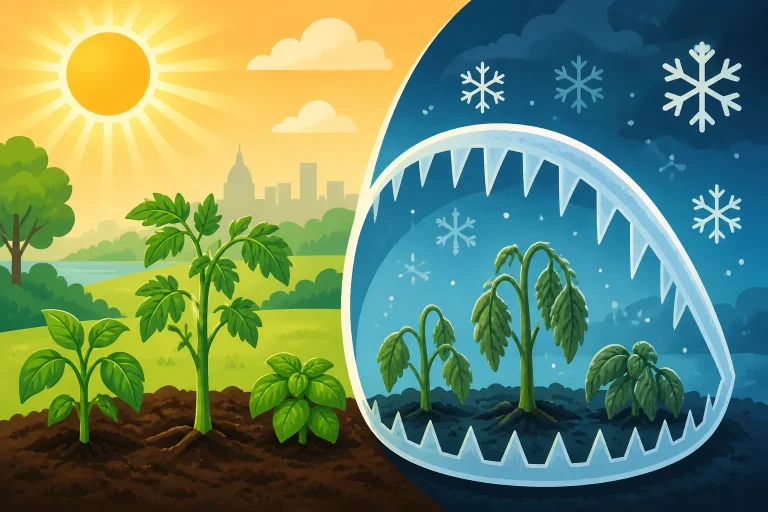
Spring frost is another reason not to use a hardiness-zone change as a shortcut. A map’s winter-cold category does not predict the last frost in a particular yard. Frost risk can differ between nearby sites: low spots may collect cold air, while sheltered areas near structures may retain warmth. Even a garden that often warms early can still face a sudden cold snap.
Use a frost guide as a planning aid, not a promise. Illinois Frost Dates Guide: Spring Thaw to Autumn Freeze explains how to think about seasonal timing, while How to Use Spring Freeze Odds When Timing Early Garden Sowing focuses on handling uncertainty. The practical point is to avoid treating any single date—or a hardiness-zone label—as a guarantee.
A planting calendar also needs to distinguish between crops. Some vegetables tolerate cool conditions and can be sown while the soil is still cool. Others need warmer soil and more settled weather. A schedule that makes sense for peas or leafy greens may be too early for a tender warm-season crop. For a broader comparison, see Spring Planting Guide for Cool and Warm Illinois Crops.
Rather than asking, “Did my zone get warmer, so can I plant earlier?” ask:
- Does this crop tolerate cool soil and chilly nights?
- Is the bed workable, or is it wet enough to compact when disturbed?
- Does the seed packet describe a preference for warm conditions?
- Is the local forecast showing a stable pattern or a brief warm spell?
- Can I protect the crop if cold weather returns?
Those questions connect the planting decision to the garden conditions that actually affect success.
What to check before sowing in spring
A reliable sowing decision combines the crop’s requirements with a quick assessment of the bed. You do not need to wait for perfect weather, but you do want to avoid letting a temporary warm afternoon set the schedule for the entire garden.
Check the soil, not just the air
Air temperatures can change quickly, while soil warms more gradually. A bed that feels cold or stays damp may not be ready for a crop that needs warmer conditions. A soil thermometer can help you track the bed rather than relying on how warm the day feels. Follow the crop’s seed-packet guidance when it gives a soil-temperature preference.
Soil moisture matters as well. A workable bed should crumble rather than smear into a sticky mass. Digging or sowing in saturated ground can damage its structure and make later work harder. If you are uncertain, Testing Soil Readiness: Using the Squeeze Test Before Digging explains a simple way to judge whether soil is ready to work.
Raised beds and containers may warm or dry differently from ground-level beds, but that does not make them immune to cold nights. Check the growing medium where the seeds will sit, and consider the exposure of the container. A pot on a sunny, sheltered surface may behave differently from a bed in shade or an open, windy spot. Use observation rather than assuming every garden in the same zone is on the same schedule.
Match the sowing method to the crop
Direct-sown seeds are exposed to outdoor soil conditions from the start. Transplants have already developed indoors or under protection, but they still need to adjust to outdoor light, wind, and temperature. Moving a transplant outside does not remove the risk of cold soil or a late freeze.
For some crops, starting seed indoors can provide a head start. For others, direct sowing is simpler and avoids the stress of transplanting. The choice depends on the crop, the available growing season, and whether you can provide appropriate indoor light and care. Direct Sowing vs Transplanting in Illinois Garden Beds can help you compare the options.
If you raise seedlings indoors, do not use a warmer hardiness-zone label as a reason to rush them outside. Before transplanting, allow them to adjust gradually to outdoor conditions. Then consider the forecast and the state of the soil. A tender seedling can be set back by cold nights even when a sunny afternoon feels comfortable.
Read the seed packet for crop-specific guidance
Seed packets are more useful for sowing decisions than a zone label alone. Look for guidance about when to sow, whether to start indoors or outdoors, soil conditions, and expected time to maturity. Those directions help you plan for the individual crop rather than applying one calendar rule to everything.
Packets from Botanical Interests, like other seed packets, can be a useful reference for the variety’s planting instructions. Treat the instructions as crop-specific guidance, then account for your local weather and garden conditions. A packet cannot predict every cold snap or the way a particular bed drains, so use it alongside observation.
For help interpreting packet language, see Reading Seed Packets and Maturity Days for Illinois Gardeners. If you are choosing varieties, Choosing Vegetable Varieties for the Illinois Growing Season can help you think about how a crop’s needs fit the time and conditions available in your garden.
Build a planting plan around crop needs and local conditions
A practical Illinois planting plan separates crops by their tolerance for cold and their need for warm soil. That keeps an early planting window for cool-season crops from becoming an excuse to put every vegetable out at once.
| Garden decision | What to use as your guide | What a warmer zone does not tell you |
|---|---|---|
| Choosing perennial plants | Winter hardiness for your area | Whether spring soil is ready for vegetable seeds |
| Sowing cool-tolerant crops | Crop instructions, workable soil, and current conditions | Whether a frost risk has ended |
| Sowing tender crops | Warm-soil needs and a settled forecast | Whether an early warm spell will last |
| Moving indoor seedlings outdoors | Seedling readiness, gradual adjustment, and weather | Whether the transplant can tolerate a cold night |
| Comparing local gardens | Site exposure, shade, drainage, and nearby structures | Whether every yard in a zone shares the same schedule |
Start by making a short list of what you want to grow. Sort it into crops that can tolerate cool conditions and crops that need warmer soil. Then check the instructions for each crop and compare them with the actual bed conditions. This gives you a sequence of decisions without forcing the whole garden into one planting date.
For cool-season crops, focus on whether the soil can be worked and whether the crop can handle the expected conditions. For warm-season crops, pay closer attention to soil warmth and nighttime conditions. If the calendar says a crop is usually planted soon but your ground remains cold or wet, it can be sensible to wait. A calendar helps you prepare; it cannot replace a local check.
Local microclimates can shift the details. A sunny, sheltered bed may warm sooner than a shaded garden with heavy, damp soil. A low part of the yard may be more exposed to frost than a spot beside a wall. These differences are useful, but they do not turn a hardiness zone into a precise forecast. Record what happens in your own beds and use those observations to refine your plan in future seasons.
If the forecast turns colder after sowing, decide whether the crop needs protection. A cover can reduce exposure to a short cold spell, but it is not a substitute for choosing the right crop and timing. Make sure any covering is suitable for the plants and conditions, and remove or adjust it as needed. Covering Garden Vegetables When Freezing Temperatures Threaten discusses how to think through that choice.
For a deeper look at the role of soil temperature, Why Mid-May Ground Temps Matter More Than an April Heat Wave explains why a warm stretch in the air may not mean a warm bed. The useful takeaway is not to treat a calendar date as a magic switch. Wait for the crop, soil, and weather to line up closely enough for the planting you intend.
Common mistakes when using hardiness zones for spring sowing
One common mistake is assuming that a zone change shifts every planting date in the same direction. It does not. The map addresses winter cold relevant to perennial survival, while vegetable sowing depends on seasonal conditions and crop needs. Moving every date earlier because a zone label changed can lead to poor germination or stressed transplants.
Another mistake is focusing only on the average or typical schedule. A planting calendar is a planning tool, not a forecast. Spring can bring swings between mild days and cold nights. If you are growing a sensitive crop, a brief period of warmth is not enough on its own to show that conditions are settled.
It is also easy to treat the garden as if it has one uniform climate. A sunny raised bed, a shaded in-ground plot, and a container on an exposed porch can warm and dry at different rates. Apply the same general planting guidance, but check each area rather than assuming that a single observation describes the whole yard.
Gardeners can also confuse frost tolerance with soil readiness. A crop may tolerate cool air but still struggle when sown into cold, saturated soil. Conversely, warm soil does not guarantee that tender foliage will be safe if a cold night is coming. Consider both the growing medium and the forecast.
Finally, avoid using a perennial’s hardiness rating as proof that an annual vegetable is ready to plant. Perennial survival through winter and successful germination or establishment in spring are separate questions. A zone can help you assess whether a perennial is suited to your area, but it cannot answer every question about a vegetable crop.
A better approach is to use several sources of information for different purposes:
- Use the hardiness map to understand winter suitability for perennials.
- Use a regional planting calendar to plan approximate sowing windows.
- Use seed-packet instructions to understand the needs of a particular crop.
- Check the soil and forecast before sowing or transplanting.
- Keep notes about how your own beds respond to spring conditions.
That approach is more flexible than trying to convert a map change into a new calendar. It also makes it easier to adjust when a season does not follow the pattern you expected.
Frequently Asked Questions
If my area falls in a warmer zone, should I sow vegetables earlier?
Not automatically. A warmer zone reflects average extreme winter cold, not spring soil warmth or frost timing. Check the crop’s needs, the bed, and the current forecast.
Does a warmer zone mean the last spring frost will come sooner?
No. A hardiness zone is not a last-frost forecast. Use regional frost information as a planning aid, then account for conditions in your own yard.
Can I plant cool-season crops before warm-season crops?
Often, their needs differ, so a planting plan can put cool-tolerant crops earlier and wait for warmer conditions before sowing tender crops. Follow each crop’s instructions and check the soil.
What should I use the hardiness zone for?
Use it as one tool for assessing whether perennial plants can handle typical winter cold in your area. For vegetable sowing, rely on crop-specific guidance and current spring conditions.
Sources
- USDA Agricultural Research Service — How to Use the Maps (checked November 15, 2026)
Disclaimer
This article is for general informational purposes only and does not constitute professional advice. Laws, prices and regulations vary by location and change over time. Consult a qualified professional for guidance on your specific situation. Illinois Gardening Guide is not a government agency and is not affiliated with any university extension, state department of agriculture or other government agency.